 Tel: +86-15876591363
  Email: Tony@aputon-transformer.com

- English
- 简体中文
- عربي
- БеларускаяName
- Русский язык
- Français
- ខ្មែរKCharselect unicode block name
- ກະຣຸນາ
- Ruwanda
- Malay
- বাংলা
- ဗာရမ်
- Zulu, eNingizimu Afrika
- Português
- 日本語
- ภาษาไทย
- Español
- IndonesiaName
- Tiếng Việt
- 繁体中文
SF₆ Usage in Electrical Systems: Circuit Breakers and GIS Cabinets
2025-02-18 16:44:31
Click:
Introduction
Sulfur hexafluoride (SF₆) is a colorless, odorless, and non-toxic gas with a molar mass of 146.06 g·mol⁻¹. It is non-flammable and has a density of 6.164 g/L as a gas (at 1 bar) and a boiling point of -50.8°C. The molecular structure of SF₆ is octahedral, and it is a hypervalent molecule with no dipole moment. Due to its unique properties, SF₆ is widely used in the electrical industry, particularly in high-voltage circuit breakers and gas-insulated switchgear (GIS) cabinets.
High-Voltage Circuit Breakers
One of the primary applications of SF₆ in the electrical industry is in high-voltage circuit breakers. These devices are crucial for isolating electrical equipment during maintenance or in the event of a fault. SF₆ provides excellent insulation and arc-quenching properties, making it an ideal medium for use in high-voltage circuit breakers.
- Insulation Properties: SF₆ has a high dielectric strength, which means it can withstand high electric fields without breaking down. This property ensures that the circuit breaker can effectively isolate electrical components, even under extreme conditions.
- Arc-Quenching Capabilities: When an arc is formed during the operation of a circuit breaker, the SF₆ gas rapidly quenches the arc, preventing further electrical discharge. This rapid arc quenching is critical for ensuring the safety and reliability of the electrical system.

Gas-Insulated Switchgear (GIS) Cabinets
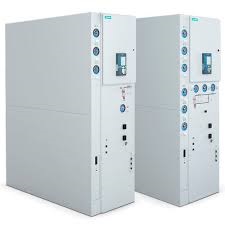
SF₆ is also extensively used in gas-insulated switchgear (GIS) cabinets. These cabinets are designed to reduce the physical size and footprint of electrical switchgear, making them particularly useful in urban and industrial settings where space is limited.
- Compact Design: The insulating properties of SF₆ allow for the compact design of GIS cabinets. This is achieved by reducing the required clearance distances between live parts and grounded surfaces, which would be much larger in air-insulated switchgear.
- High Levels of Insulation: Despite their compact size, GIS cabinets maintain high levels of electrical insulation and safety. This is particularly important in high-voltage applications, where traditional air-insulated switchgear would require significantly more space.
Environmental Considerations
While SF₆ is an excellent insulating and arc-quenching medium, it is also a potent greenhouse gas with a global warming potential 23,500 times that of CO₂. This makes the environmental impact of SF₆ a significant concern.
- Emission Reduction Strategies: To mitigate this, the electrical industry has implemented various strategies to minimize SF₆ emissions. These include:
- Recycling and Recovery Programs: Proper handling and recycling of SF₆ gas can significantly reduce emissions.
- Leak Detection and Repair: Regular maintenance and leak detection can prevent unintended releases of SF₆.
- Development of Alternatives: Research is ongoing to develop alternative insulating gases with lower environmental impacts.
Conclusion
Sulfur hexafluoride (SF₆) is a critical component in the electrical industry, particularly in high-voltage circuit breakers and GIS cabinets. Its excellent insulating and arc-quenching properties make it indispensable for ensuring the safety and reliability of electrical systems. However, the environmental impact of SF₆ necessitates careful management and the exploration of alternative solutions to balance technological needs with environmental stewardship. By implementing effective emission reduction strategies and continuing research into alternatives, the electrical industry can continue to benefit from the advantages of SF₆ while minimizing its environmental footprint.









CONTACT
Office-ADD: Second floor, Jiutan Village, Xiuquan Street, Huadu District, Guangzhou, Guangdong, China
Factory-ADD: Fenjiangbei Road No.91, Chancheng, Foshan, Guangdong, China
(formerly State-owned Foshan Transformer Factory)
Phone: +86-15876591363
00 1 (323) 841-2808
E-mail: Tony@aputon-transformer.com
Lily@aputon-transformer.com





 WhatsApp
 E-mail