 Tel: +86-15876591363
  Email: Tony@aputon-transformer.com

- English
- 简体中文
- عربي
- БеларускаяName
- Русский язык
- Français
- ខ្មែរKCharselect unicode block name
- ກະຣຸນາ
- Ruwanda
- Malay
- বাংলা
- ဗာရမ်
- Zulu, eNingizimu Afrika
- Português
- 日本語
- ภาษาไทย
- Español
- IndonesiaName
- Tiếng Việt
- 繁体中文
Air Circuit Breaker vs. Circuit Breaker: Which One is Right for You? Discover the Differences and Benefits.
2024-11-27 10:02:21
Click:
The air circuit breaker is one of the most commonly used electrical components by everyday users. But what exactly are air circuit breakers and circuit breakers?
Definition of Air Circuit Breaker and Circuit Breaker
In both everyday life and industry, air circuit breakers and circuit breakers are common electrical protection devices. Their primary function is to prevent overloads or short circuits, thereby protecting electrical equipment from damage. Air circuit breakers are typically used in low-voltage electrical systems, while circuit breakers are found in a wide range of electrical devices and circuits. While their functions are similar, there are differences in their principles, structure, and areas of application.
Working Principle of Circuit Breaker
A circuit breaker is an electrical device that automatically trips the circuit. It is widely used in residential, industrial, and commercial power systems. The circuit breaker detects abnormal changes in current—such as overload, short circuit, or ground fault—and automatically disconnects the circuit, protecting electrical equipment from potential damage. The circuit breaker operates based on two mechanisms: thermal tripping and magnetic tripping. When the current exceeds the preset value, the internal contacts of the circuit breaker open, thus providing protection.
Differences Between Air Circuit Breaker and Circuit Breaker
Air circuit breakers and circuit breakers differ in terms of appearance, function, and application environments. Air circuit breakers typically use air as the medium to interrupt current, making them suitable for low-voltage systems. In contrast, circuit breakers are designed for a wider range of electrical equipment and can handle higher current loads. Circuit breakers often use oil, gas, or vacuum as the arc-extinguishing medium, making them ideal for high-voltage systems. Additionally, circuit breakers provide stronger protection and can handle a variety of electrical faults.
Working Principle of Air Circuit Breaker
An air circuit breaker, also known as an air breaker, is an electrical protection device that uses air to interrupt the circuit. The basic principle is that when an abnormal current occurs (such as overload or short circuit), the air circuit breaker automatically disconnects the circuit to prevent damage to electrical equipment. The air circuit breaker operates through two mechanisms: thermal tripping for overload protection and magnetic tripping for short circuit protection. The internal arc is extinguished by air, making it suitable for low-voltage electrical systems.
Advantages and Disadvantages of Air Circuit Breaker
Air circuit breakers offer advantages such as a simple structure, low cost, and ease of installation. They are effective in low-voltage circuits and can prevent overloads and short circuits, helping to protect electrical equipment. However, their drawbacks are also quite noticeable. They are not suitable for high-voltage, high-current, or complex environments. Additionally, over time, they may experience wear and malfunction, leading to higher maintenance costs.
Advantages and Disadvantages of Circuit Breaker
Circuit breakers, being more sophisticated protection devices, offer the advantage of withstanding higher voltages and currents, making them ideal for a wide range of complex electrical systems. Their automatic tripping function is highly reliable and can greatly minimize the risk of equipment damage. However, circuit breakers are relatively expensive, larger in size, and more difficult to install and maintain.
Choosing an Air Circuit Breaker or a Circuit Breaker
The choice between an air circuit breaker and a circuit breaker mainly depends on the requirements of the electrical system. If the system has low voltage and current, with a focus on overload and short circuit protection, an air circuit breaker would be an ideal choice. However, if the system requires a higher level of protection, such as managing complex electrical faults or high-voltage currents, the circuit breaker is undoubtedly the better option.
Anair circuit breakeris a type of circuit breaker that uses air to extinguish the arc. It is typically applied in low-current systems, whereas circuit breakersencompass various types and are designed to meet a broader range of power protection requirements.
There are various types of circuit breakers. For instance, this is aminiature circuit breaker.
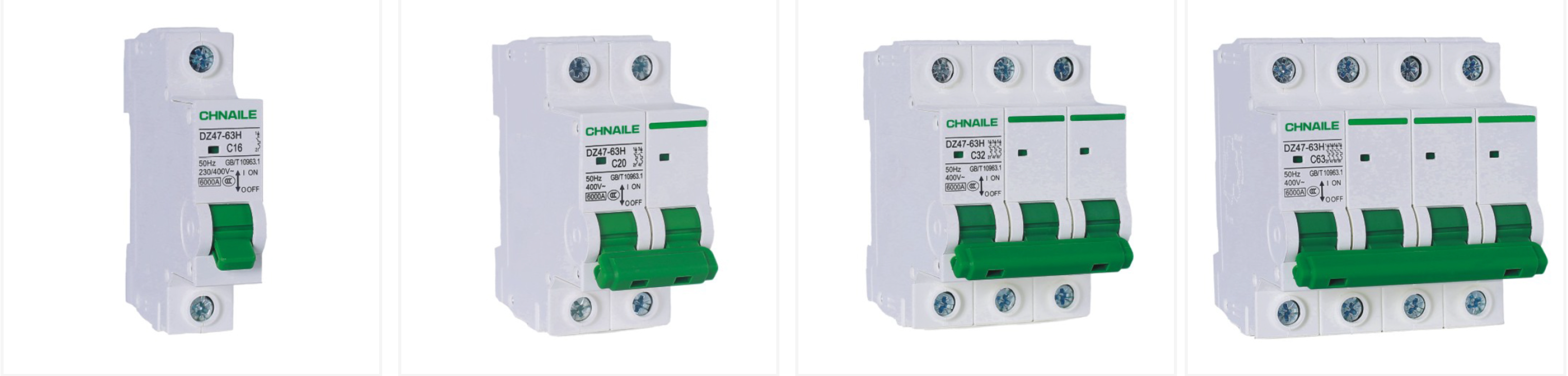
It is suitable for use with alternating current at 50Hz or 60Hz, with a rated working voltage of up to 400V and rated current ranging from 6A to 63A. It is mainly used for overload and short-circuit protection of lighting, distribution circuits, and equipment in office buildings, residences, and similar structures. Additionally, it can be used for infrequent circuit disconnection and switching under normal operating conditions.
This is a circuit breakerwith a plastic enclosure.
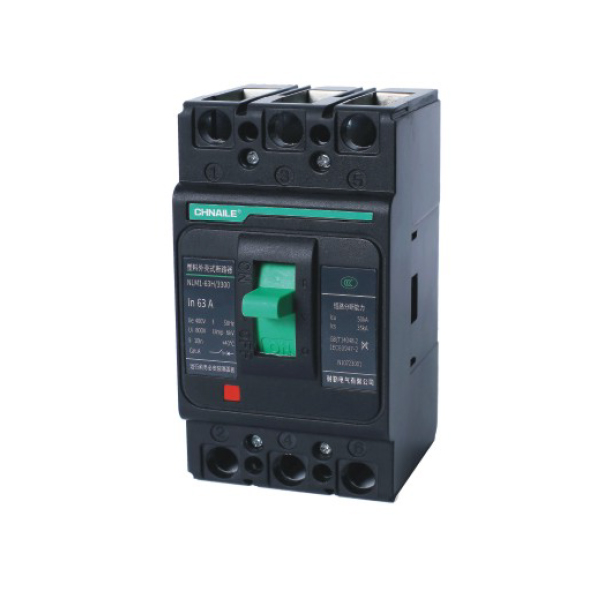
Suitable for circuits operating at 50Hz, with a rated current ranging from 10A to 1250A, and a rated working voltage of up to 400V.
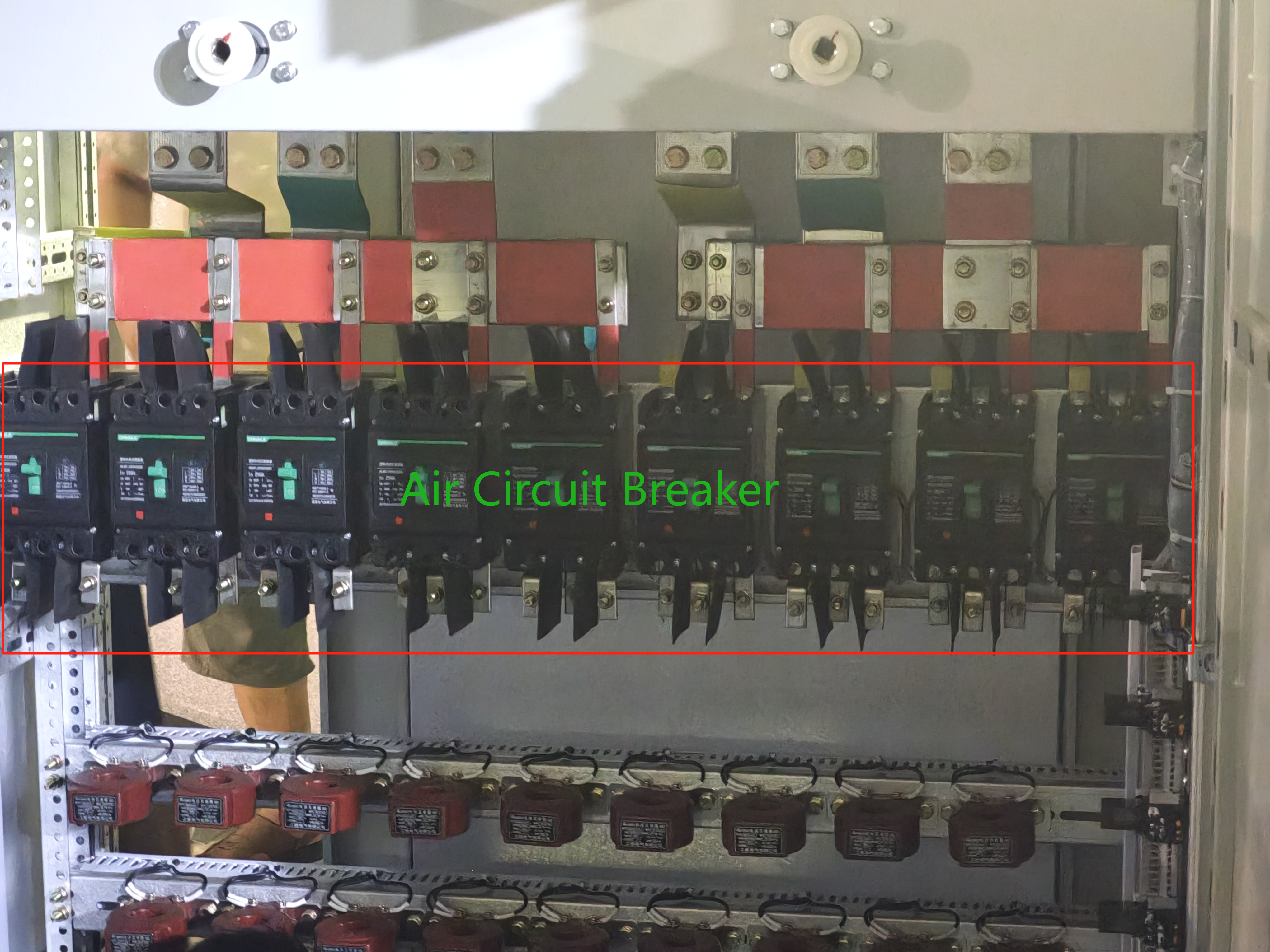
The circuit breakers installed in the electrical panels of Aputon Company.
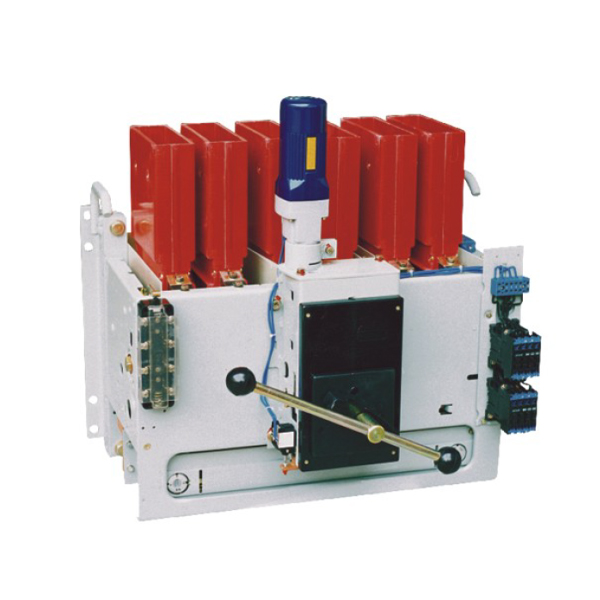
This is a versatile circuit breaker
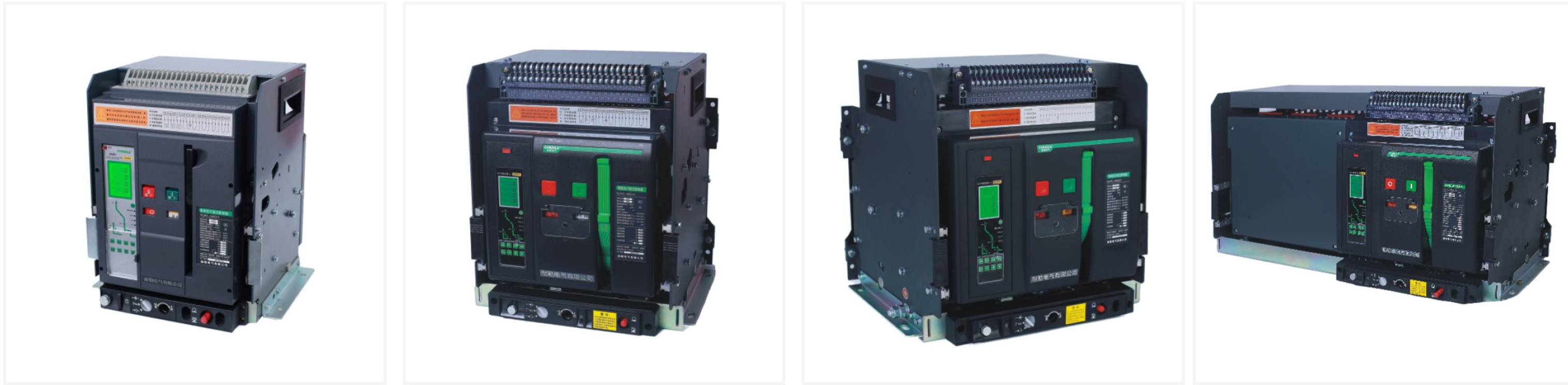
It is suitable for distribution networks with alternating current at 50Hz, rated current ranging from 630A to 4000A, and rated working voltage from 380V to 1140V, used for power distribution and protecting supply lines and equipment from overload, undervoltage, and short circuits. It can also be used in a 50Hz, 380V AC grid to protect motors from overload, undervoltage, and short circuits. Under normal conditions, it can be used for infrequent circuit switching or motor starting. Circuit breakers with a rated current of 630A in the frame size also feature a drawer structure and current-limiting breakers. Due to the current-limiting feature, these circuit breakers are particularly suitable for networks where large short-circuit currents may occur.
This is an isolating switch. The isolating switch is suitable for alternating current at 50Hz, with a rated voltage of up to 660V (AC) and 440V (DC), and a rated current ranging from 125A to 3150A. It is used in industrial power distribution systems for infrequent switching and circuit isolation. For currents above 1000A, it serves only for electrical isolation.

Isolating Switch
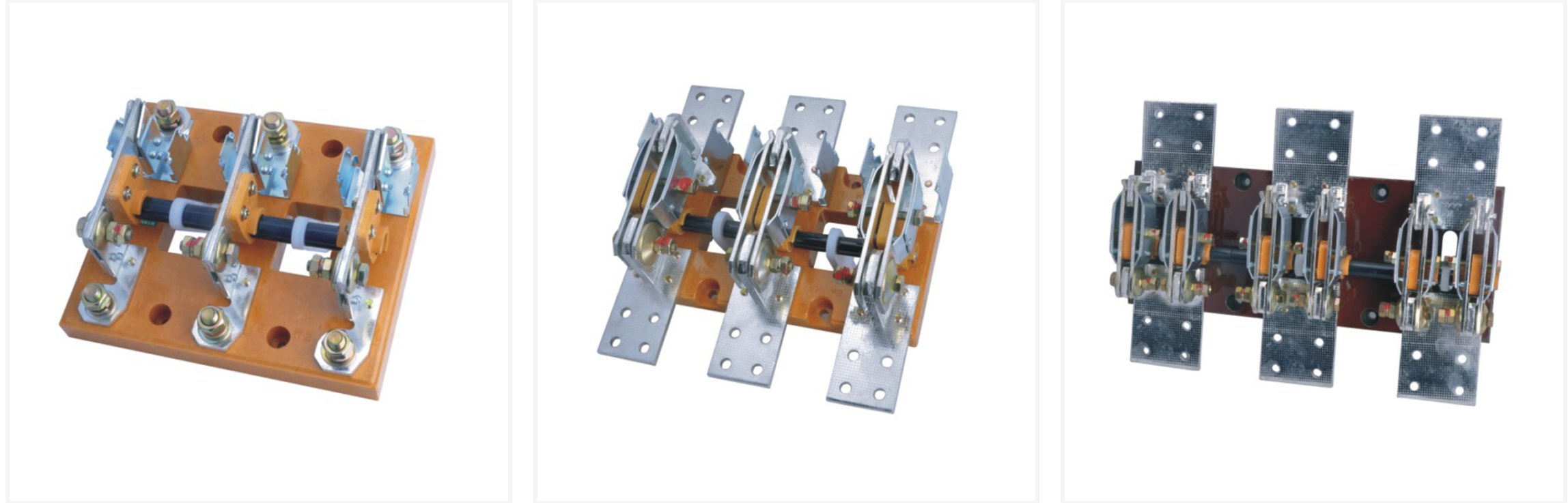
Single-pole knife switch, double-pole knife switch
Single-pole and double-pole knife switches are suitable for use in complete power distribution systems with alternating current at 50Hz, rated voltage of 380V, direct current of 220V, and rated current up to 1500A. They are used for manually switching and disconnecting AC/DC circuits infrequently or for electrical isolation purposes. The HD(S)11 series central handle knife switches are primarily used in power stations. These switches do not disconnect live circuits but are used solely for electrical isolation.
The working principle of the circuit breaker is based on arc extinguishing. When the circuit breaker opens the circuit, an arc forms between the moving and stationary contacts. The circuit breaker’s ability to disconnect the circuit depends on whether it can extinguish the arc that forms between the contacts during disconnection.
Note: These types of switches should not be operated under load!
An 'air circuit breaker,' or 'air switch' as commonly known, uses air as an insulating medium (meaning there is an air gap). Its arc-extinguishing medium is air. To understand this concept, we need to first clarify the relationship between three terms: switch – circuit breaker – air switch (air circuit breaker).
A switch refers to any device that can manually disconnect a circuit. Among all types of switches, the one we are most familiar with is probably the wall switch used to control lighting.
A circuit breaker is a type of switch. When a circuit is opened or closed, sparks—referred to as an 'electric arc'—can easily occur. A mild electric arc can wear out the switch contacts, while a severe arc can be dangerous and even injurious, which is a major hazard in electrical systems. Therefore, arc extinction is necessary on switches. A switch with arc-extinguishing capabilities is called a 'circuit breaker.'
An air switch—circuit breaker is a type of switch, so it is also called an 'air circuit breaker.' There are various methods for arc extinction in circuit breakers. One method is to elongate the arc, allowing it to cool naturally in the air until it extinguishes. Let's take a look at its arc-extinguishing device (arc-extinguishing shield).
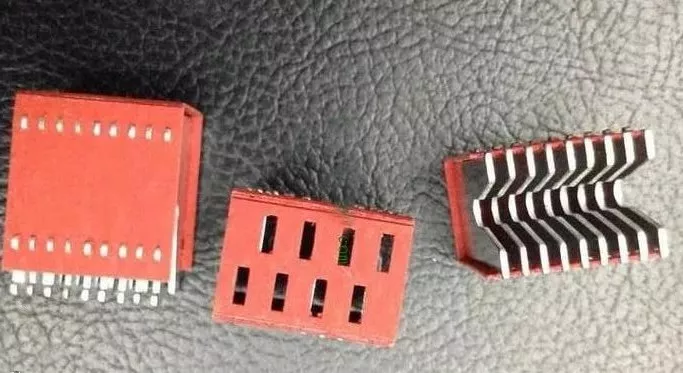
This is the small red component, featuring a row of metal plates. When an electric arc forms at the switch contacts, it is attracted to these metal plates. An electric arc forms between each pair of metal plates, which then conducts to the next plates, stretching the arc until it matches the length of the entire arc-extinguishing shield.
As the length increases, the cooling speed also increases. You can think of the arc like a flame: without enough heat, it will extinguish.
The air switch is the most cost-effective method of arc extinction, without exception. However, it is not universal. For example, in circuits with higher voltage, the generated arcs are much larger, and air switches cannot handle such large arcs. Additionally, in environments where even the slightest spark is unacceptable, air switches are unsuitable.
Therefore, besides air switches, there are many other methods for arc extinction. For instance, vacuum arc extinction (vacuum switches), where the contacts engage directly in a vacuum, preventing arc formation due to the lack of air. Or oil-immersed switches, where the arc is surrounded by cooling oil to extinguish it, and others.
Author:
Guangzhou Aputon Electrical Co.,Ltd.









CONTACT
Office-ADD: Second floor, Jiutan Village, Xiuquan Street, Huadu District, Guangzhou, Guangdong, China
Factory-ADD: Fenjiangbei Road No.91, Chancheng, Foshan, Guangdong, China
(formerly State-owned Foshan Transformer Factory)
Phone: +86-15876591363
00 1 (323) 841-2808
E-mail: Tony@aputon-transformer.com
Lily@aputon-transformer.com





 WhatsApp
 E-mail