 Tel: +86-15876591363
  Email: Tony@aputon-transformer.com

- English
- 简体中文
- عربي
- БеларускаяName
- Русский язык
- Français
- ខ្មែរKCharselect unicode block name
- ກະຣຸນາ
- Ruwanda
- Malay
- বাংলা
- ဗာရမ်
- Zulu, eNingizimu Afrika
- Português
- 日本語
- ภาษาไทย
- Español
- IndonesiaName
- Tiếng Việt
- 繁体中文
Aputon Acquires Haas NGC VF5SS CNC Machine to Boost Manufacturing Precision and Efficiency
2024-12-03 18:23:53
Click:
1. Aputon Strengthens Manufacturing Competitiveness with the Acquisition of Haas CNC Machines
As global manufacturing continues to evolve towards higher precision and smarter technology, the choice of equipment has become a critical driver of competitive advantage.Aputon, a leading Chinese company, has recently invested inHaas Automation's CNC machines, underscoring the company's commitment to high-quality development within the manufacturing sector.
Founded in 2015, Aputonspecializes in the research, development, and production of electrical systems for both high and low voltage, transformers, cable accessories, and UPS energy storage solutions. With certifications inISO9001,ISO14001, andOHSAS18001,Aputon’s products are now sold in over 20 countries across Asia, Africa, Europe, and the Americas. In today’s fiercely competitive global market, product quality and precision manufacturing have become paramount for the company’s continued success and growth.
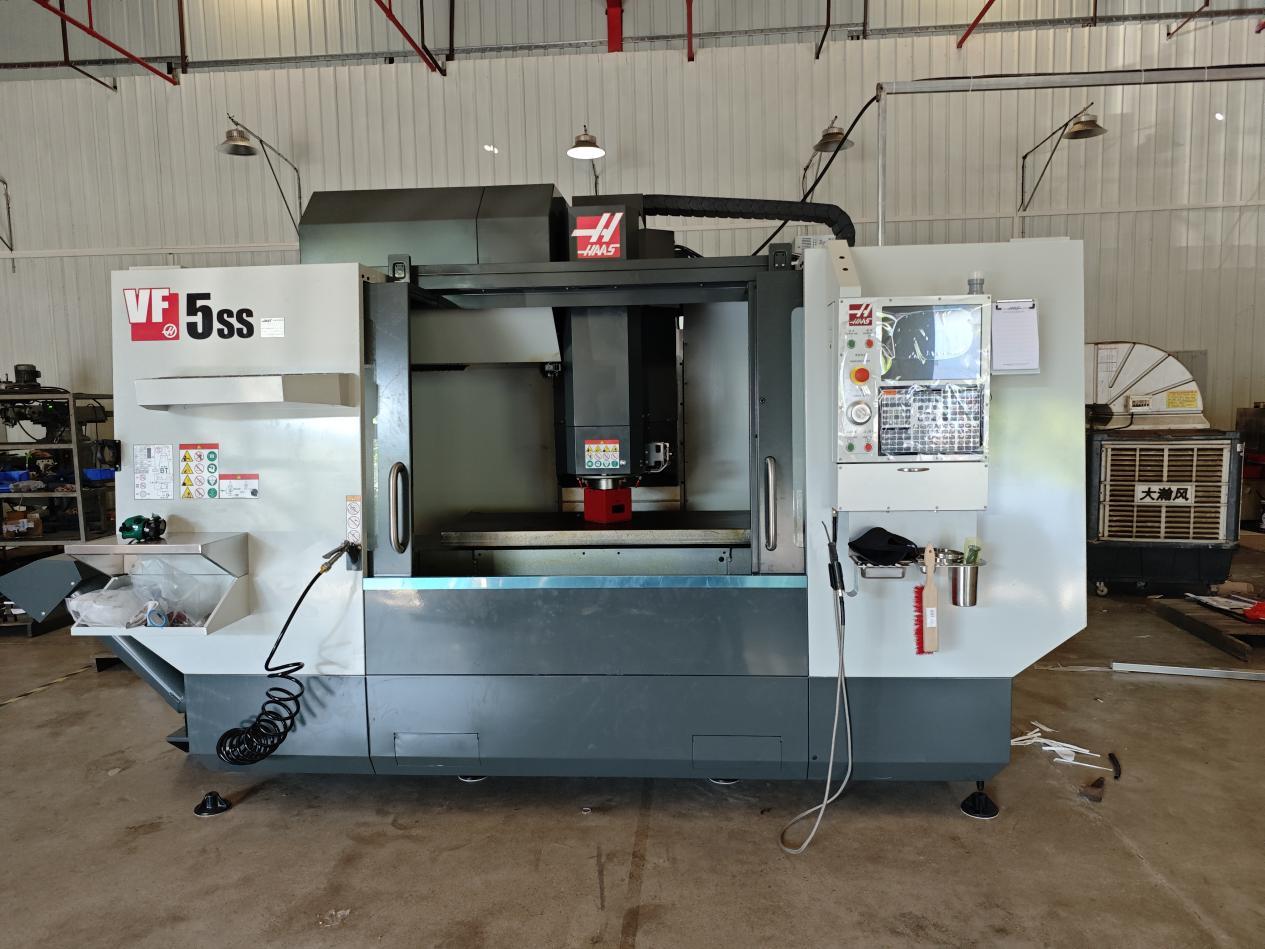
Aputon’s choice to acquire Haas CNC machinesreflects the company’s unwavering commitment to advancing its manufacturing processes and ensuring superior product quality. While China’s machine tool industry maintains a stronghold in the mid-to-low-end market, there is still significant room for growth in high-precision machining. Haas CNC machines, known globally for their exceptional precision control, robust performance, and cutting-edge control systems, are widely regarded as leaders in the field of precision manufacturing.
In the current manufacturing landscape, selecting high-end equipment has evolved from a simple brand preference to a carefully considered decision, driven by practical factors like efficiency, precision, quality, and stability. Leading global manufacturers routinely choose equipment from world-class brands such as Yamazaki Mazak(Japan),DMG Mori(Germany), Haas Automation(USA), andWalter Maschinenbau(Switzerland), all of which embody the pinnacle of global manufacturing excellence.
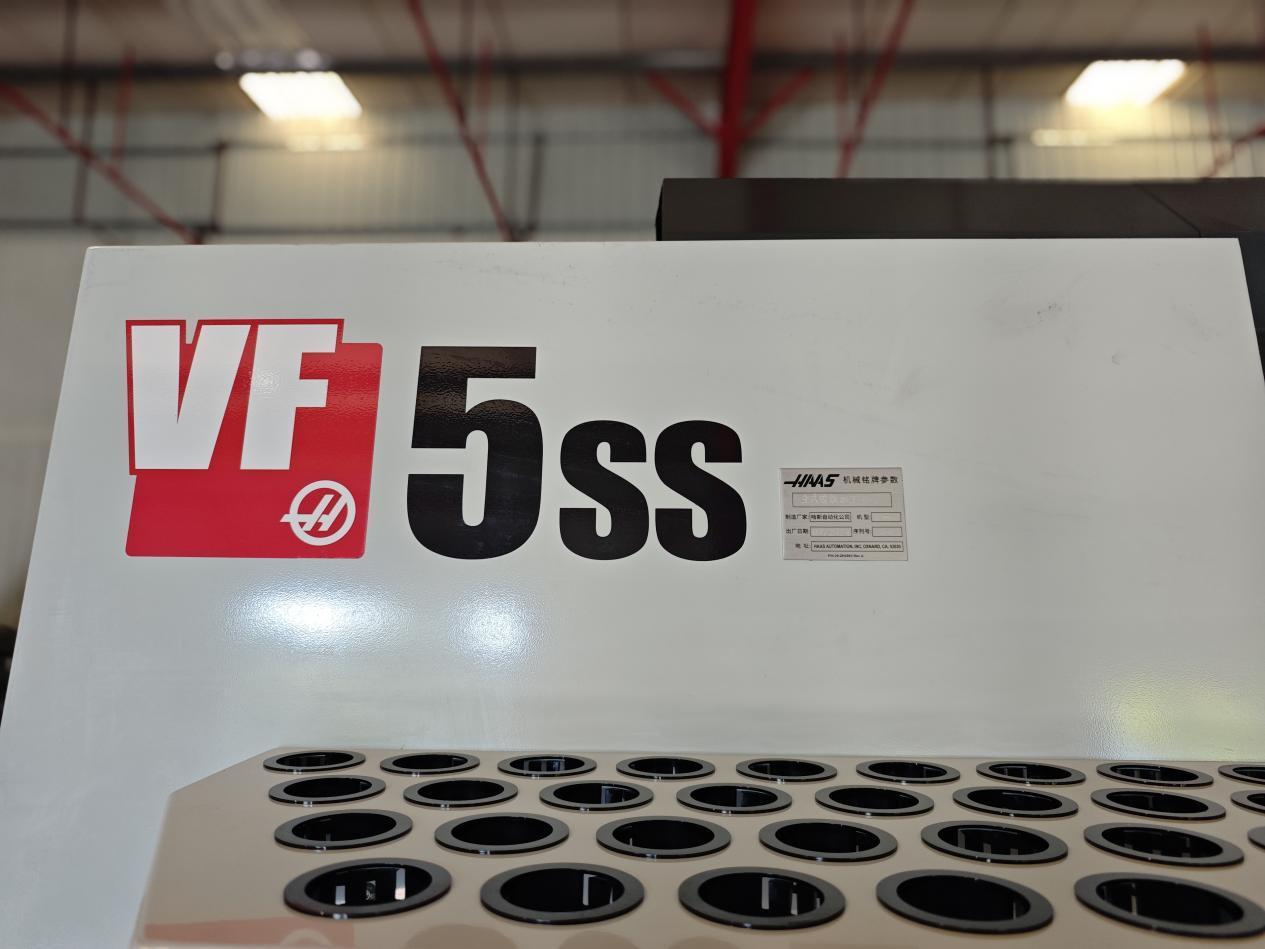
Haas CNC machinesstand out due to their innovative design and exceptional performance reliability. For example, their cast iron structure offers more than ten times the vibration dampening ability of steel, while the dual-support ball screw system guarantees exceptional processing precision. Additionally, the high-speed side-mounted tool changer significantly boosts production efficiency. These features makeHaas CNC machinesthe ideal choice for Aputon, meeting the company’s rigorous demands for precision machining in electrical equipment manufacturing.
By adopting Haas CNC machines,Aputonnot only reaffirms its commitment to product quality but also demonstrates its forward-thinking vision for the future. In the increasingly competitive global market, the choice of manufacturing equipment is not just about improving current efficiency but shaping future growth potential. This dedication to "investing in quality" is a reflection of China’s manufacturing sector’s ongoing shift toward high-quality development.
2. Haas Automation: A Legacy of Innovation and Excellence in CNC Manufacturing
Founded in 1983 and headquartered in Oxnard, California,Haas Automationhas grown to become one of the world’s leading manufacturers ofCNC machine tools.
The company was founded by Gene Haas, a forward-thinking entrepreneur with a deep passion for engineering and manufacturing. Having worked in the lathe machining industry,Gene Haasgained invaluable hands-on experience, which led him to recognize the growing need for high-efficiency, reliable CNC machines. This insight inspired him to create Haas Automation, with a mission to develop top-quality, affordable machine tools that meet the evolving demands of the industry.

Beyond being a successful entrepreneur, Gene Haasis also a passionate motorsport enthusiast. His racing team has consistently delivered remarkable results across various competitions, significantly enhancing the global reputation of theHaasbrand. This blend of engineering excellence and racing success has made Haas Automationnot just a leader in CNC manufacturing, but also a name synonymous with performance and precision.

Haas CNC, a shining star in the U.S. machine tool industry, has a development story that reads like a legend. In 1983, at a time when the U.S. machine tool industry was experiencing widespread decline, Gene HaaslaunchedHaas Automation, driven by his sharp market insight. With his deep understanding of what machinists truly needed, Haas set out to create machines that were not only functional but also operator-friendly.
Breaking away from traditional manufacturers, Haasrevolutionized the industry by introducing standardized CNC machines and openly publishing price lists—a move that was unprecedented at the time. By utilizing universal parts and streamlining production processes, Haaswas able to cut costs while ensuring quick deliveries, a game-changing innovation in the competitive landscape. By 1997,Haashad become the largest CNC machine tool manufacturer in the U.S., with over 10,000 units shipped.
The key to Haas’ssuccess lies in its unique business philosophy. The company established the Haas Factory Outlet (HFO)system to guarantee a consistent, high-quality customer experience. Always forward-thinking,Haasdedicates 10% of its annual sales to R&D, allowing the company to continually expand its product lineup to include over 100 standard models.

At the heart of Haas’ssuccess lies its unwavering commitment to quality management. Not only has the company achieved ISO 9001:2000 certification, but it has also built a robust quality management system that ensures every product meets the highest standards. Central to this effort is the"Haas Way"—a corporate culture that fosters a professional, dedicated team to guarantee the consistency and excellence of its products.
Today,Haasstands as one of the world’s leading CNC machine tool manufacturers. In markets across the globe, including China, the brand enjoys widespread recognition, thanks to its superior American-made reputation, a comprehensive distribution network, and world-class after-sales service. Originating fromCalifornia, this iconic brand has spent over 40 years proving that a relentless focus on quality, continuous innovation, and customer-centric values ensures long-term success in an increasingly competitive global market.
3. The Advantages of Haas CNC Machines: A Global Leader in Precision and Performance
As one of the most renowned brands in CNC machinery, Haas CNCstands out in a competitive market due to a range of key advantages:
American-made with Global Reach: Headquartered in California,Haas Automation is the largest machine tool manufacturer in the U.S., with an expansive global service network. Manufactured in Southern California,Haas products are sold and supported through more than 170 authorized dealers across 60+ countries, ensuring customers around the world receive reliable, timely service.
Comprehensive CNC Product Line:Haas offers a complete array of CNC solutions, including vertical machining centers, horizontal machining centers, turning centers, 5-axis machining centers, and rotary products. Additionally,Haas provides automation solutions such as automatic loaders, multi-pallet systems, and 6-axis robotic systems, making it a one-stop shop for all CNC needs.
Exceptional Service and Technical Expertise: With over 215,000 CNC machines installed worldwide, Haas has built a strong service foundation. Its team of factory-trained and certified technicians delivers localized service, ensuring customers have access to expert support whenever needed.
User-friendly and Consistent Control Systems: Designed and manufactured in-house, Haas control systems are optimized for use withHaas machines, making them intuitive and easy to operate. The company’s commitment to consistency means that customers benefit from the same straightforward control system across the entire product line.
Transparent Pricing and Rapid Configuration:Haasoffers a user-friendly online configuration tool that allows customers to quickly select and configure machines. All pricing and financing details are instantly displayed, eliminating the need for back-and-forth communication and streamlining the purchasing process.
Advanced Automation to Drive Production Efficiency:Haas offers a diverse range of automation options designed to streamline operations, cut costs, and increase the number of parts produced—making it easier for manufacturers to scale their production with precision.
Global Educational Support for CNC Operators: With a presence in over 4,500 institutions worldwide, Haas provides extensive resources to train the next generation of CNC operators. From certification courses to comprehensive manuals, videos, and training materials, Haas is committed to empowering skilled workers in the global manufacturing industry.
MYHAAS: Your All-in-One Machine Management Platform: TheMyHaas platform simplifies machine tool management, offering users an intuitive interface to access essential resources, manage quotes, order parts, and even register for online Haas certification courses—providing a seamless experience at every stage of production.
Flexible Financial Plans to Match Your Needs:Haasprovides tailored financial plans, ensuring that customers can select the perfect machine based on their unique requirements. The company also offers extensive support tools, including HaasConnect and an online video library, to optimize machine operation and management.
Quick Access to Replacement Parts for Minimal Downtime:Haas ensures that essential repair parts, consumables, and spare parts are easily accessible. Delivered directly to customers' workshops, these parts minimize machine downtime and help maintain continuous production.
4. Key Haas CNC Machine Models and Their Applications
Haas CNCmachines are renowned for their versatility and precision, with a range of models designed for various applications, from small part machining to high-precision five-axis work. Below are some of the most popularHaas CNC models, each tailored for specific industry needs:
Haas VF Series (Vertical Machining Centers)
TheHaas VF Series
vertical machining centers are among the most widely used machines in the industry,
designed for machining a variety of medium and small-sized parts. The VF series includes
models like VF1,VF2, and VF3,
offering flexibility for various machining tasks. Known for their high precision, speed,
and rigidity, these machines excel in milling, drilling, and tapping operations. The VF
series handles materials such as aluminum, steel, and stainless steel, and can also
tackle more complex parts and molds with ease.
Haas UMC Series (Five-Axis Machining Centers)
TheHaas UMC Series
brings five-axis machining to the forefront, allowing simultaneous machining on multiple
axes, which minimizes the need for multiple setups. This feature drastically boosts
production efficiency. The UMC series is ideal for industries that require complex and
highly precise parts, such asaerospace,automotive,medical, andmold-making sectors.
Haas ST Series (CNC Lathes)
Designed for turning operations, theHaas ST Series CNC lathes are equipped with powerful drive systems and
precise control technology, allowing the machining of various metal materials. TheST Series excels in external turning, internal hole machining, and
threading, making it a go-to machine forautomotive,mold-making, andmetalworking industries.
Haas EC Series (Horizontal Machining Centers)
TheHaas EC Series
horizontal machining centers are built for customers requiring large-scale machining
operations. With greater machining capacity and increased load handling, these machines
are perfect for heavy-duty parts. The EC series excels in machining tough materials likecast iron and steel, and is commonly used in
industries such asheavy machinery,metallurgy,mining,
and shipbuilding.
Haas MINI MILL (Mini Mills)
Compact yet powerful, theHaas MINI MILL Series offers high precision and stability, even in
limited workspace. These machines are perfect for smaller operations, such
asprototyping,small-batch production, andeducational training. Despite their size, MINI MILLS deliver consistent
results across a variety of part types, making them a great choice for smaller shops and
training environments.
5. Haas VF-5SS: A Top Choice for Precision and Speed
TheHaas VF-5SSis a highly popular vertical machining center manufactured by Haas Automation, renowned for its outstanding performance, exceptional reliability, and intuitive control system. Here’s a detailed look at theHaas VF-5SSand what makes it a preferred choice in the industry.
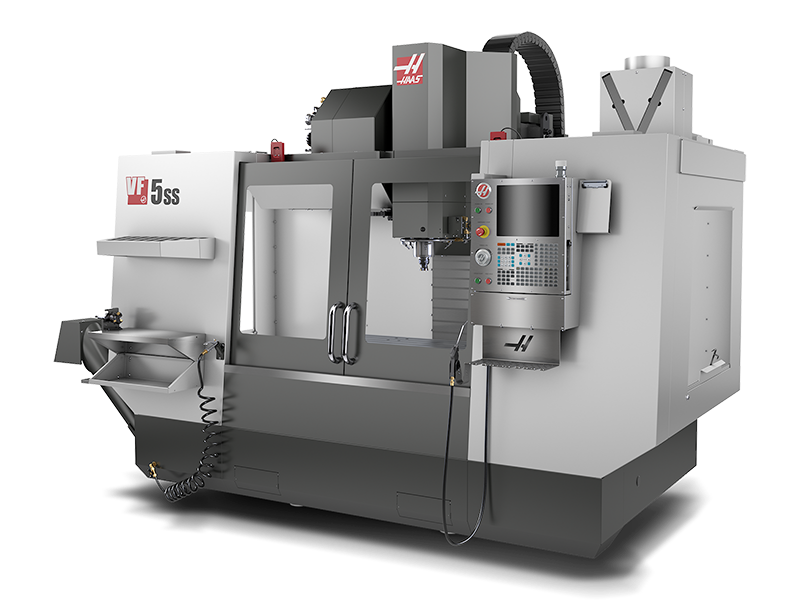
In the CNC machining industry, the Haas VF-5SSseries has garnered a reputation for its superior performance and reliability, making it a top choice for metalworking professionals. Below is an in-depth look at the features of theHaas VF-5SSseries, including its performance specifications, configuration options, and user feedback.
Performance Specifications: The Haas VF-5SS series is renowned for its exceptional high-speed machining capabilities. These machines are equipped with powerful spindles and advanced drive systems, enabling rapid cutting speeds and unmatched precision. The travel range of the VF-5SS is 1270mm x 660mm x 635mm, providing ample workspace to accommodate a wide variety of workpieces, from simple parts to complex components.
Configuration Options: The Haas VF-5SS series offers an extensive array of configuration options, including various spindle speeds, tool magazine capacities, and automation attachments. This allows users to customize the machine to meet their specific production requirements, ensuring the highest levels of machining efficiency and accuracy. Haas also provides an array of automation solutions such as automatic loaders and rotary tables, further enhancing the machine's productivity and automation capabilities.
Control System: The Haas VF-5SS is powered byHaas’ proprietary control system, which has earned high marks for its user-friendliness and comprehensive features. The system’s intuitive interface and extensive programming capabilities enable operators to quickly become proficient in using the machine, even for complex machining tasks. This ease of use is a key factor in increasing overall production efficiency.
User Feedback: The Haas VF-5SS series has received high praise from users worldwide for its impressive performance, reliability, and the exceptional customer service provided by Haas. The series is particularly favored in the education and training sectors, where its stability, ease of use, and precision make it an ideal choice for CNC education and hands-on training programs.
Buying Guide:Haas provides a comprehensive buying guide to assist customers in choosing the right machine based on their budget and specific machining requirements. By visiting the official Haas website, users can explore detailed specifications and pricing for each model and connect with localHaas dealers for personalized purchasing advice and reliable after-sales support.
6. Usability and Innovation of Haas CNC Control Systems
In today’s digital transformation of the manufacturing industry, the ease of use of CNC control systems has become a critical factor.Haasstands out in this area with its innovative approach to optimizing user experience.
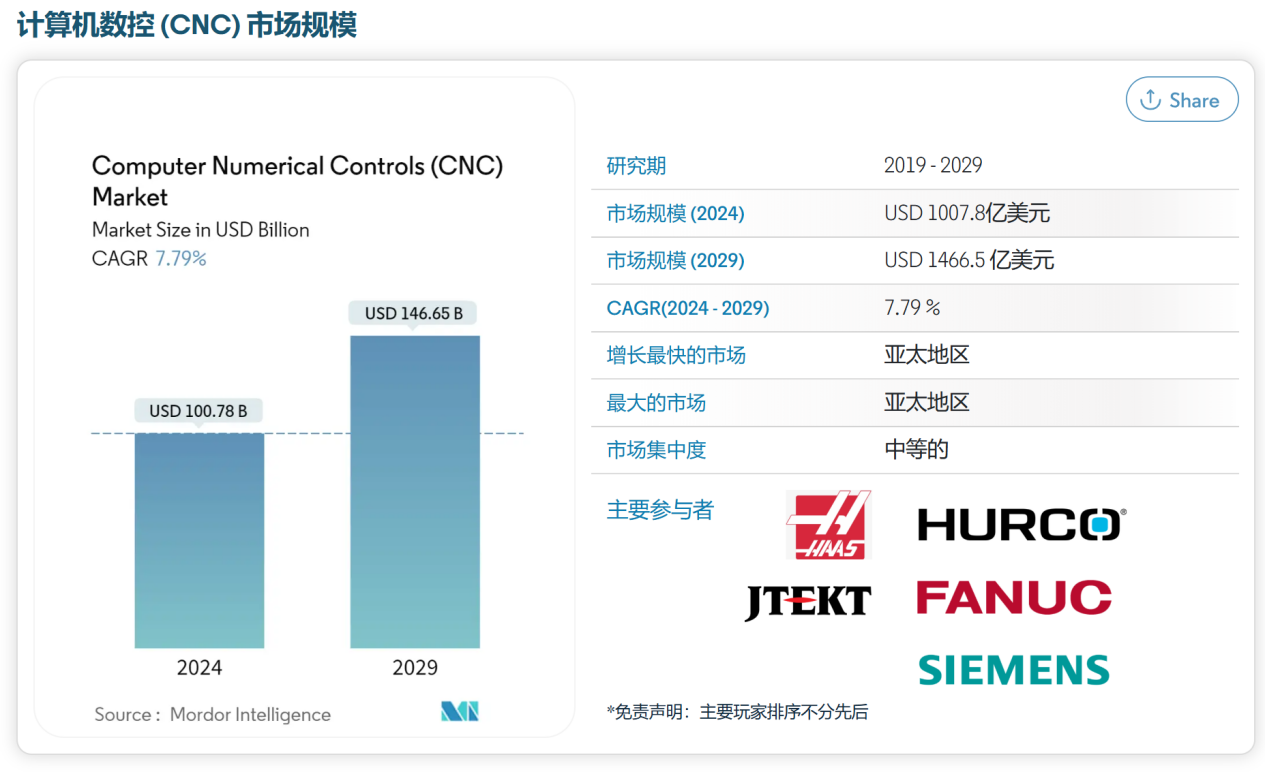
To better understand the landscape: According to the latest figures, China’s CNC system market reached a size of 12.79 billion yuan in 2023. However, international brands continue to dominate the market, with FANUCandMitsubishiholding 37% and 17% of the market share, respectively. Against this backdrop, Haashas taken a user-centric approach to redefine its CNC control system, focusing on simplicity and usability.
Haas’ innovations extend beyond technology to focus on solving real-world challenges like talent development and production efficiency. With the global manufacturing sector facing a shortage of skilled workers, Haas’ focus on usability has become a game-changer. As Tim Gatto, President of Micelli Chocolate Molds, states: “The intuitive design of the Haas controller allows me to easily train young operators fresh out of college.”
From a technical perspective, Haas’ innovations stand out in three key areas: The first is the intuitive interface. Unlike traditional CNC controllers, which often have complex and confusing interfaces, Haas has integrated a touch display and a unified cursor key design, complemented by a clear and intuitive icon system. This drastically reduces the learning curve, making it easier for operators to master. Such a design philosophy setsHaasapart in the CNC system market.
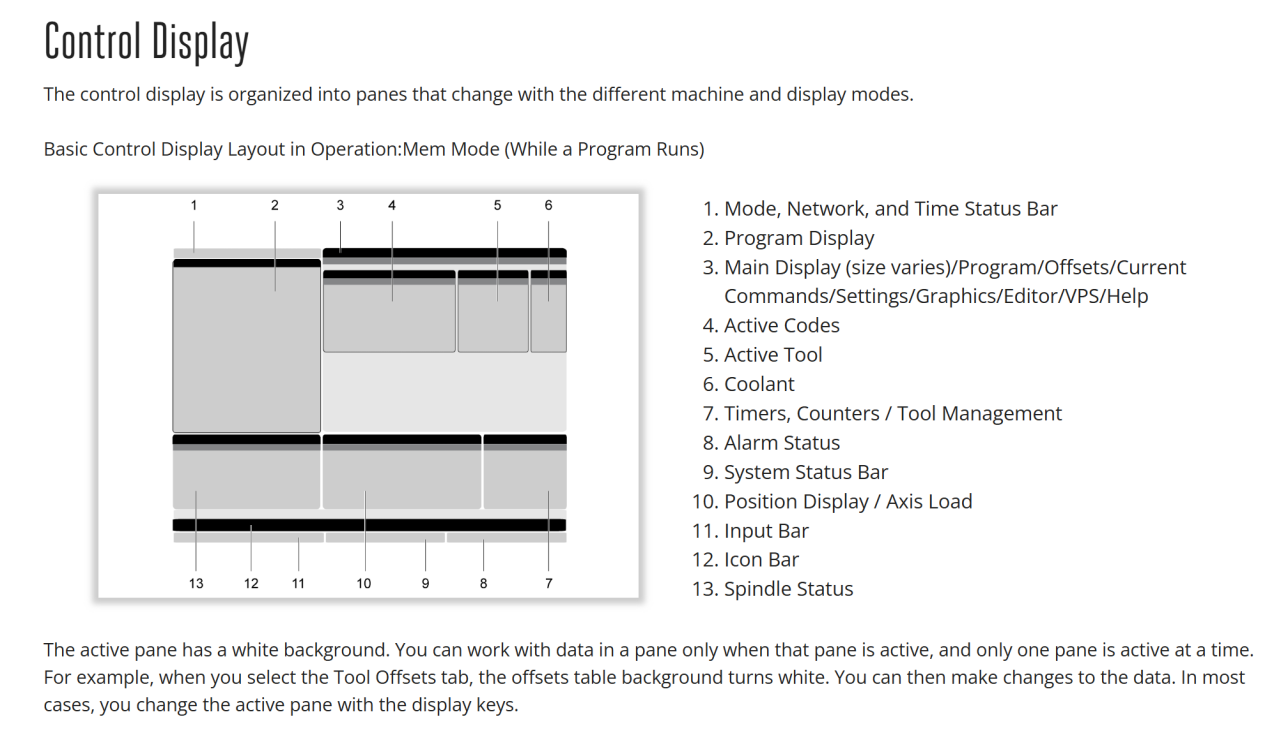
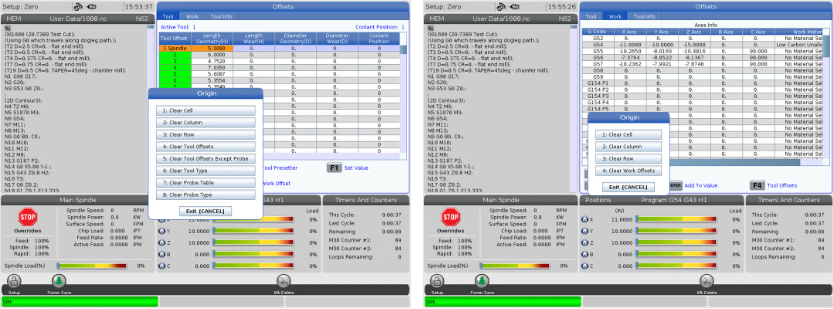
The second key innovation is the intelligent one-touch operation. For instance, when setting up tools, operators only need to press the "Tool Offset Measurement" button, and the system automatically handles the complex parameter configurations. This feature enables even beginners to quickly take on sophisticated machining tasks.
The third major innovation is Haas’ leap in networking and digitalization. Each Haas controller comes equipped with 1GB of program memory and supports both Ethernet and Wi-Fi connectivity. With features like HaasDropandHaasConnect, operators can wirelessly transfer programs and remotely monitor their machines—critical capabilities in the era ofIndustry 4.0.
Haas' influence extends significantly into education as well. More and more educational institutions are adopting Haas equipment, helping students grasp CNC technology faster and ensuring that the manufacturing industry has a steady stream of talent skilled in theHaassystem. Over time, this strategy not only benefits education but also helps companies build a solid workforce for the future.
Notably, with the CNC adoption rate rising from 49.5% in 2018 to 63.1% in 2023, systems like Haas, with their focus on ease of use, will become even more critical. These systems not only help businesses rapidly enhance their CNC capabilities but also alleviate the pressure of the ongoing shortage of skilled workers.
From a broader perspective, Haas' innovation marks a paradigm shift: it’s about offering robust functionality while placing user experience at the forefront. This principle is particularly significant for the ongoing digital transformation of the manufacturing sector. With theChinese CNC system marketexpected to reach 27 billion yuan by 2027, innovations like Haasare setting new industry benchmarks.
Ultimately, Haas' success highlights a crucial insight: in the journey toward smart manufacturing, innovation shouldn't just focus on piling up complex features; it should also prioritize how those features genuinely serve the user, making intricate technologies simpler and more accessible. This could very well be the future direction for the entire manufacturing industry.
AsTim Gatto, President of Micelli Chocolate Molds, points out, “The ease of use of the Haascontroller makes it easier for us to train new hires and seamlessly integrate them into the production line.” This blend of professionalism and user-friendliness is exactly what keeps Haasat the forefront of the CNC machine tool market.
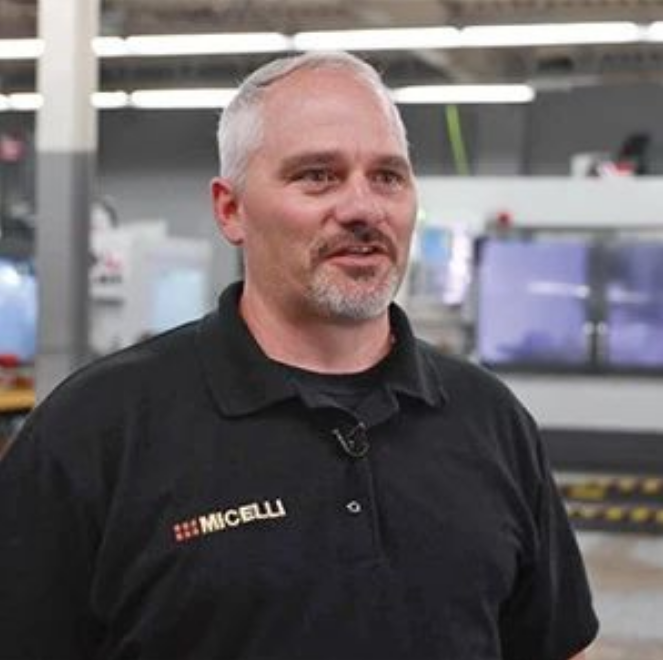
TIM GATTO Micelli Chocolate Molds
Haascontrollers are designed to be user-friendly and easy to learn, with a consistent controller across the entire product range. This consistency has madeHaas machine toolsa popular choice in educational institutions worldwide. As a result, graduates are already well-versed in Haas systems, making it significantly easier to recruit new operators and programmers while streamlining the training process.
One Button, Multiple Functions: Simplifying CNC Operations with Haas Controllers
One-Touch "Tool Offset Measurement"
Setting up tool
offsets is a breeze with the Haassystem. Simply move the tool to the part
surface and press the "Tool Offset Measurement" button to automatically save the
tool length to the tool offset memory. Press the "Next Tool" button to repeat
the process for each tool, making it incredibly efficient for all tools (Milling machines
only).
"Next Tool" Button
After setting the current tool's
offset, pressing the "Next Tool" button (for Milling machines) automatically
swaps in the next tool into the spindle and prepares the machine for the new tool to reach
the required position for its offset setup.
"Forward" and "Backward" Buttons
With the
"Forward" and "Backward" buttons, you can control the spindle’s
rotation speed and direction. Pressing "Forward" starts the spindle rotating
forward (M03), while "Backward" rotates the spindle in reverse (M04), giving
operators more control over the machining process.
One-Touch Clear for All Offset Settings
On the "Tool
Offset" or "Workpiece Offset" page, simply press the "Home Set"
button to instantly clear all offset settings with just one click. This feature
significantly boosts efficiency by reducing manual adjustments.
G28 "Return to Zero" Button
TheG28 Return to Zerobutton is an indispensable feature for quickly returning all axes to their home
positions, especially in the absence of a second home button. On milling machines, the
Z-axis moves first, followed by other axes, while on lathes, the X-axis moves first, and
the other axes follow. For even more precision, users can choose to return a specific axis
to zero before pressing the G28 button.
Designed, Built, and Programmed by Haas
While CNC machining can be
complex, Haasensures that its controllers simplify the user experience,
making them accessible for operators at all skill levels.
Powerful Standard Features:
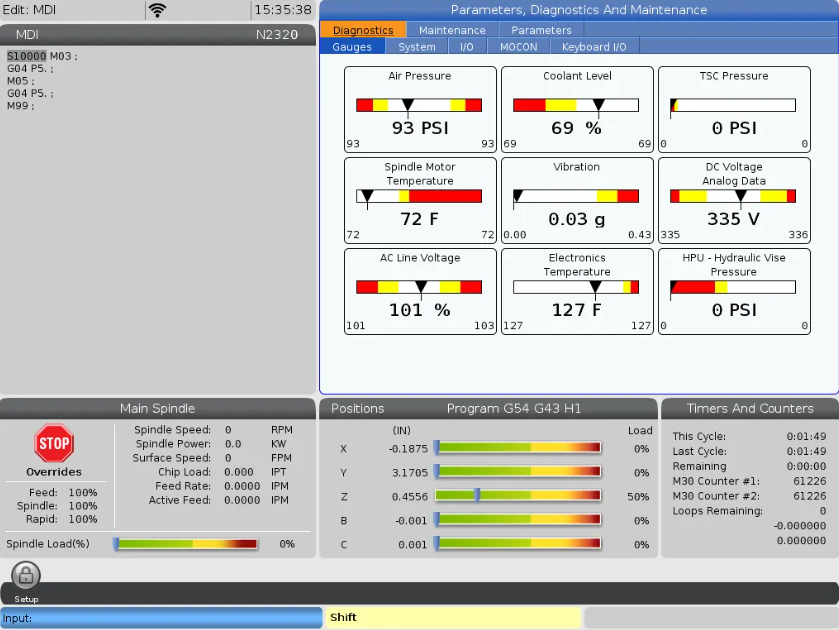
Simple Navigation
Navigation is quick and simple, using a unified cursor key and intuitive icon design throughout the entire operation.
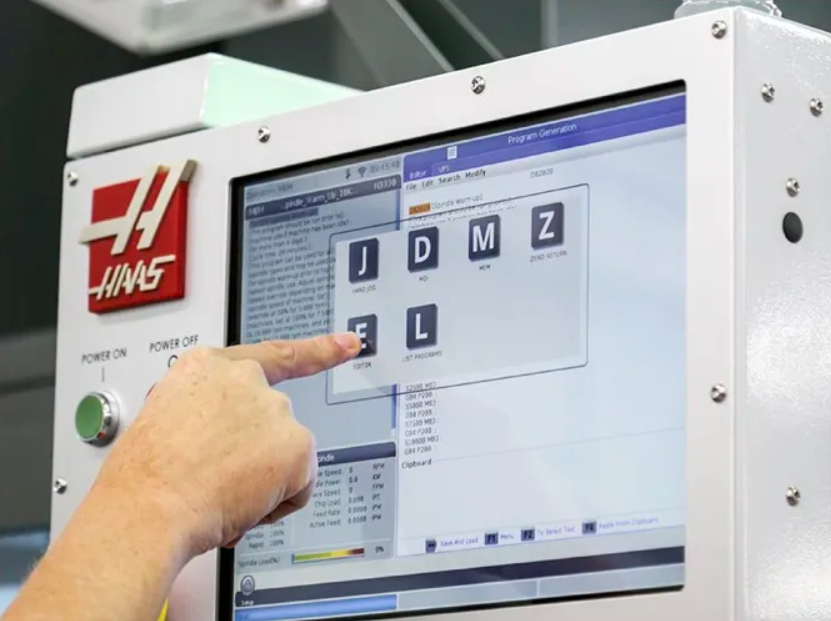
Our "touchscreen" interface allows for window selection, data entry, and other control functions without the need for a standard keyboard, speeding up programming and simplifying control navigation.
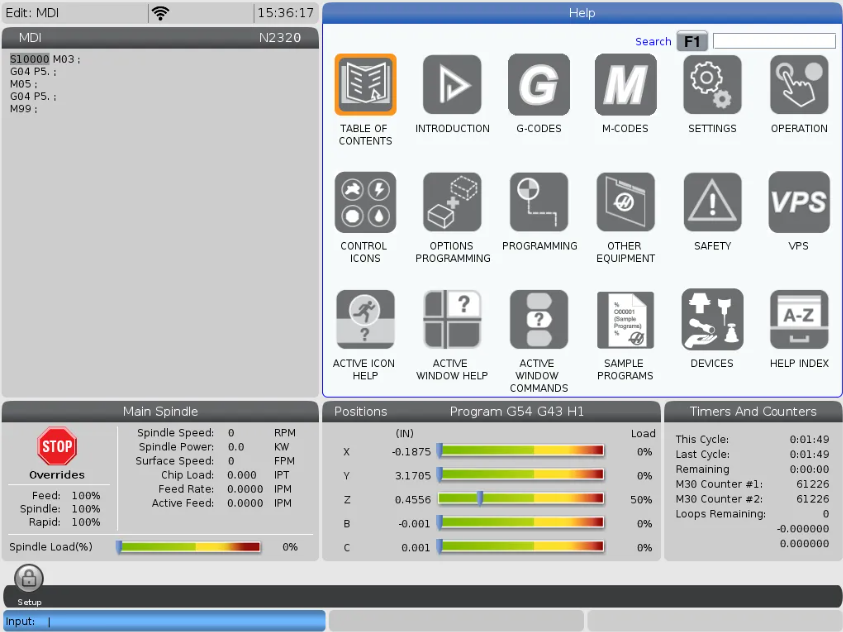
Accessible Icons
Enhanced Help Interface and Powerful Standard Features of Haas Controllers
More Powerful Standard Features:
MyHaas App
Wherever you are — whether in the workshop or on the
move — MyHaasmakes it easy to manage and access essential information
about your CNC machines. With the free MyHaasapp for Android and iOS, you
can:
Effortlessly manage all your machines
Seamlessly access HaasConnect and HaasDrop
Save and organize machine quotes for easy reference
HaasDrop Wireless File Transfer
HaasDrop is a
fast and efficient solution for transferring files such as images, videos, and program
files directly from your mobile device to the Haas CNC controller. With
the free MyHaas app, you can wirelessly send files to yourHaas machine, streamlining your workflow and saving time.
HaasConnect Monitoring System
Stay on top of your machine’s
performance with HaasConnect, a cutting-edge monitoring system that
sends real-time email alerts about your machine's operational status. You can easily
set upHaasConnect via the MyHaas Portal or the freeMyHaas app for Android and iOS devices. This feature is standard on all
newHaas CNC machines at no extra cost.
Optimized for Students and New Operators
TheHaas CNC controlleris designed to be incredibly user-friendly, allowing students to spend less time familiarizing themselves with the controller layout and more time focusing on real-world part production. With its streamlined interface, students can easily transition between milling machines and lathes, enhancing both learning and productivity.
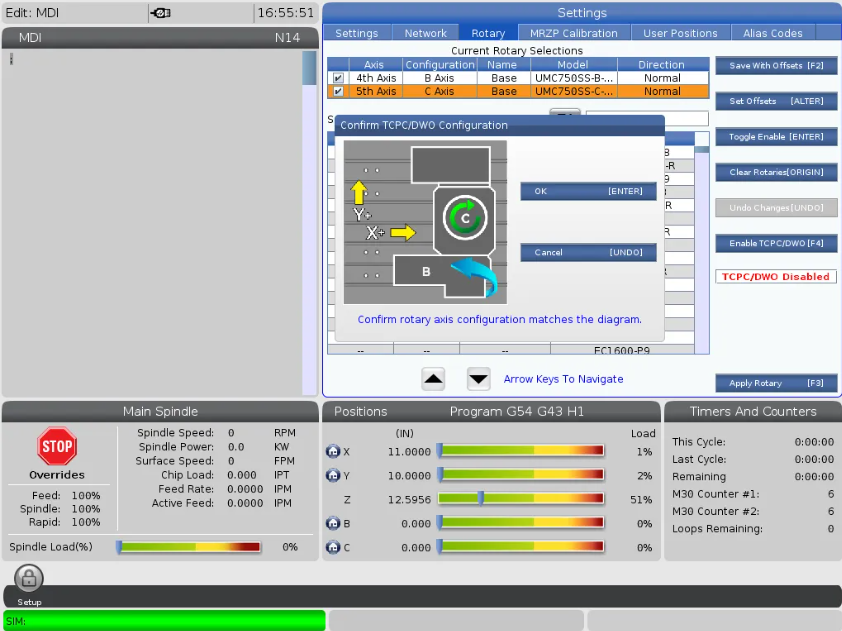
Rotary Table Setup
With simple, easy-to-understand on-screen dialogues and icons, set up and configure your rotary table quickly by specifying the rotational axis corresponding to the direction of the rotary table.
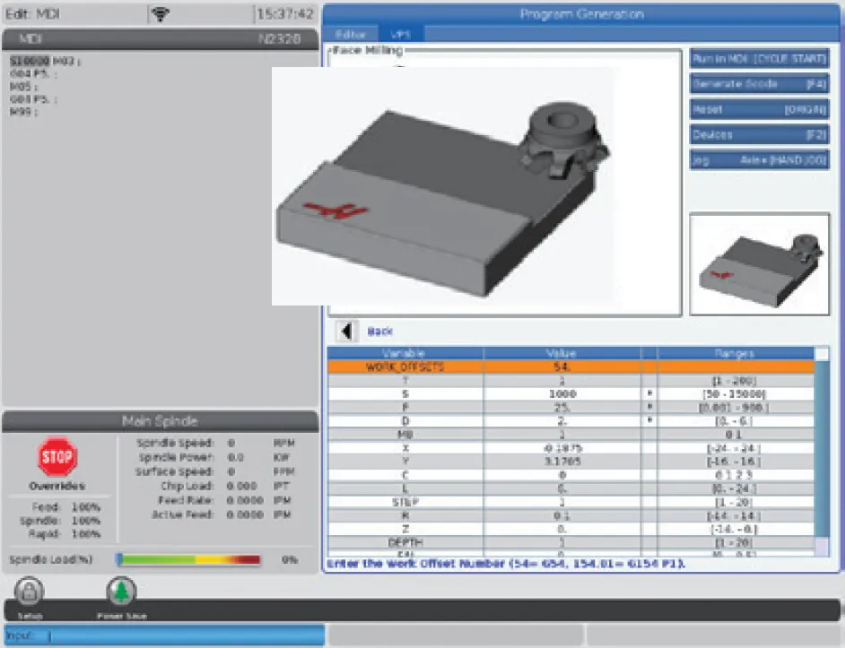
Programming Design
With the Haas Visual Programming System (VPS), use form-like templates to define features and operations, enabling rapid creation of G-code programs for both basic and complex part features.
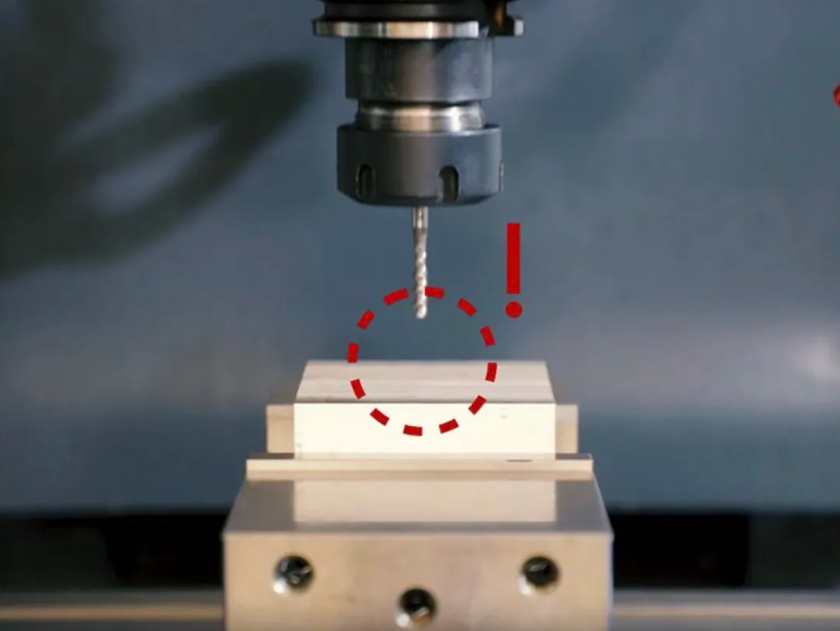
Safe Operation
The "Safe Operation" feature in Haas controllerscan detect accidental contact and immediately stop the machine to prevent significant damage.
Onboard Memory
Equipped with a standard 1GB of onboard program memory, theHaas controllerallows you to store a large number of programs directly within the system—eliminating the need for external devices for program backup. This is particularly useful for complex mold designs, enabling direct program execution from memory. This setup avoids the connectivity issues common with DNC or FNC methods. Moreover, the onboard memory is expandable up to 64GB, providing ample storage for even the most demanding tasks.
Reliable Ethernet and Wi-Fi Connectivity for Smooth Operation
EveryHaas machinecomes standard with built-in Ethernet and Wi-Fi
connectivity, allowing fast and reliable communication between theHaas controllerand your local network. The Wi-Fi capability simplifies
wireless file sharing and transmission, while also enabling remote monitoring through theHaasConnectfeature. With easy setup and the added benefit of theNetsharefunction, you can effortlessly manage network connections,
enhancing both operational flexibility and efficiency.
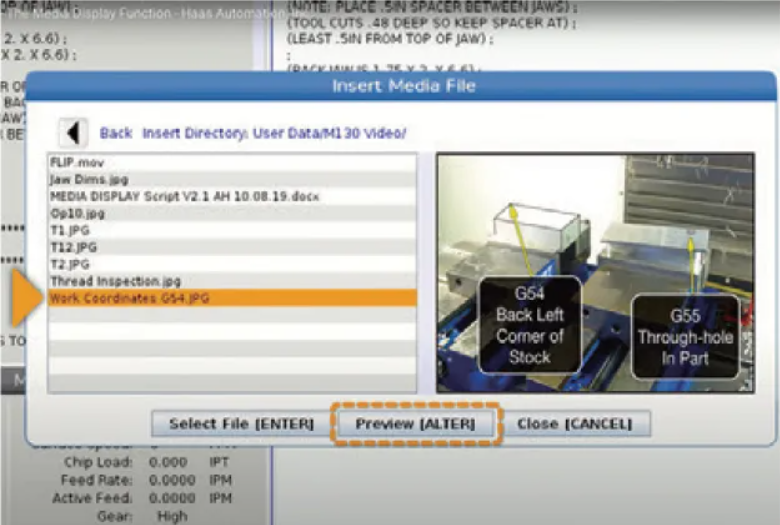
Media Display
This feature supports easily placing images and videos within programs, ensuring operators have all the information they need for correct job operation. TheHaas M130 media display M-codeis a powerful tool that allows direct communication between machine operators and programmers via the Haas controller during NC program execution.
7. Difference Between Haas Vertical and Horizontal Mills
In essence, the difference between vertical and horizontal mills goes far beyond just the spindle direction. Let’s take a deeper look at the key differences between these two types of industrial machines, and the applications they are best suited for.
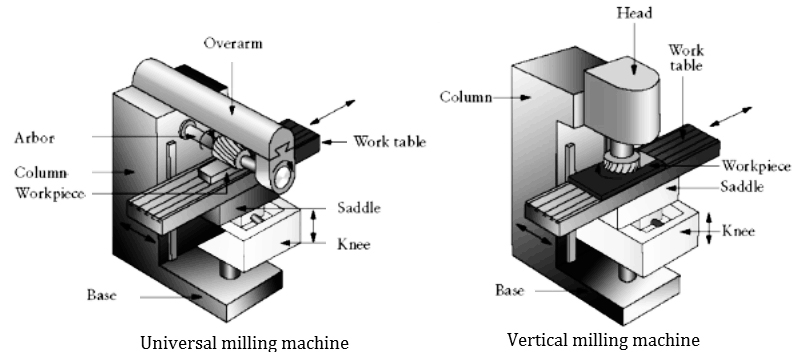
The main differences can be summarized in five key aspects:
Mechanical Structure: The vertical mill has a vertical spindle design, with the tool positioned vertically to the worktable, allowing the operator to directly observe the machining process. In contrast, the horizontal mill has a horizontal spindle, which limits visibility, but this design allows the machine to handle greater cutting forces.
Cutting Capacity: Due to its structure, the horizontal mill is capable of deeper cuts. The tools used are typically shorter and more robust, providing better stability during heavy cutting operations. On the other hand, vertical mills use longer, thinner tools that are more suited for fine machining but can be prone to vibration during deep cuts.
Operational Complexity: Vertical mills are generally more intuitive and easier to operate, making them a popular choice for entry-level CNC machines. Horizontal mills, however, require more specialized skills, especially when dealing with complex multi-surface machining.
Cost Factor: The purchase and maintenance costs of vertical mills are significantly lower compared to horizontal mills. A horizontal mill can cost three to four times more than a vertical mill of the same specifications. This explains why vertical mills are more common in smaller machining shops.
Applications: Vertical mills are particularly suited for fine machining of small parts and single-surface projects. Horizontal mills, on the other hand, excel at handling large, heavy workpieces, especially when multi-surface machining is required.
Haas Vertical vs Horizontal Mills: Key Advantages and Considerations for Choosing the Right Machine
Vertical Mill Advantages:
Ease of Operation: The Haas vertical mill is known for its user-friendly interface, making it an ideal choice for both beginners and experienced operators. With simpler operation and lower maintenance costs, it’s an excellent option for cost-conscious businesses.
Space-Efficient Design: Its compact size makes it perfect for environments where space is limited, making it a popular choice for small workshops or those with high equipment density.
Widely Available Operators: Due to its widespread use in various industries, it’s easier to find skilled operators, ensuring a smoother hiring and training process.
Precision Machining: The Haas vertical mill is ideal for high-precision tasks. Its ability to handle small parts with intricate designs makes it perfect for projects where accuracy is paramount.
Horizontal Mill Advantages:
Enhanced Cutting Power: TheHaas horizontal mill offers superior cutting capacity, which is essential for tasks requiring heavy material removal. Its robust design allows it to handle tough materials and high cutting forces.
Multi-Surface Machining: Horizontal mills are more versatile when it comes to machining parts with multiple surfaces, making them ideal for complex, multi-axis operations.
Efficient Chip Removal: A key benefit of horizontal mills is their effective chip management system, ensuring better surface finishes and smoother operation.
Optimized for Mass Production: With its higher material removal rate and ability to integrate into automated systems, theHaas horizontal mill is perfect for large-volume production runs, increasing operational efficiency and reducing cycle times.
Factors to Consider When Choosing the Right Mill:
Workpiece Size and Weight: For heavy-duty tasks or large parts, ahorizontal mill may be the better choice due to its higher stability and cutting power. For smaller, lightweight parts, avertical mill offers greater flexibility and precision.
Precision Requirements: If high-precision machining is essential, especially for fine details, the Haas vertical mill is better suited to these tasks.
Production Volume: For larger production runs and mass manufacturing, the horizontal mill excels due to its greater cutting power and faster material removal rate.
Budget Constraints: If you’re operating on a limited budget,vertical mills offer a more cost-effective solution, both in terms of initial investment and long-term maintenance.
Workshop Space: The compact design ofvertical mills makes them ideal for smaller spaces, whilehorizontal mills require more floor space for their larger setup.
Operator Skill Level: For operators with less experience, theHaas vertical mill is easier to operate and maintain. However, if you have a skilled workforce, a horizontal mill may be more beneficial for handling complex machining tasks.
Choosing Between Vertical and Horizontal CNC Mills: Key Considerations for Manufacturers
Inmodern manufacturing, it’s common for companies to equip bothvertical millsand horizontal millsto address various machining requirements. Larger enterprises often opt forhorizontal CNC millsto enhance production efficiency, while small and medium-sized manufacturers tend to favor the more economicalvertical mills, especially for precision machining of smaller parts.
Thanks to continuous advancements in CNC technology, the gap in processing precision between vertical and horizontal mills is gradually narrowing. However, the structural differences between these two types of machines still define their performance advantages in specific applications, and these distinctions will likely remain.
When considering a CNC mill purchase, companies should evaluate theirproduction needs,workpiece size, andbudgetbefore making a decision. If your focus is onprecision machiningfor small parts, and budget constraints are a factor, a vertical millis likely the more suitable option. On the other hand, if your operations require processing large workpieces with high production volumes, and you have the financial capacity, a horizontal millis a better investment for improving efficiency.
No matter which mill type you choose, ensuringadequate operator trainingand strict adherence to operational procedures is essential to maintain both the machining qualityand thelong-term durabilityof your equipment.
Author:
Guangzhou Aputon Electrical Co.,Ltd.









CONTACT
Office-ADD: Second floor, Jiutan Village, Xiuquan Street, Huadu District, Guangzhou, Guangdong, China
Factory-ADD: Fenjiangbei Road No.91, Chancheng, Foshan, Guangdong, China
(formerly State-owned Foshan Transformer Factory)
Phone: +86-15876591363
00 1 (323) 841-2808
E-mail: Tony@aputon-transformer.com
Lily@aputon-transformer.com





 WhatsApp
 E-mail