 Tel: +86-15876591363
  Email: Tony@aputon-transformer.com

- English
- 简体中文
- عربي
- БеларускаяName
- Русский язык
- Français
- ខ្មែរKCharselect unicode block name
- ກະຣຸນາ
- Ruwanda
- Malay
- বাংলা
- ဗာရမ်
- Zulu, eNingizimu Afrika
- Português
- 日本語
- ภาษาไทย
- Español
- IndonesiaName
- Tiếng Việt
- 繁体中文
Voltage Stability in Modern Power Systems: The Role and Challenges of On-Load Tap Changing Transformers
2025-01-13 16:06:51
Click:
1. Understanding Voltage Stability
In today's rapidly evolving power systems landscape, voltage stability remains one of the most critical challenges faced by power system operators worldwide. As power grids continue to expand and diversify, with the integration of renewable energy sources and increasingly complex load patterns, maintaining voltage stability has become more crucial than ever. Among the various solutions developed to address this challenge, On-Load Tap Changing (OLTC) transformers have emerged as a significant tool in voltage regulation strategies.
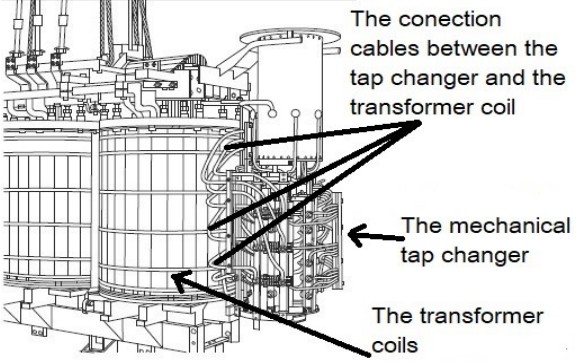
Understanding Voltage Stability Fundamentals
Voltage stability in power systems reflects the network's ability to maintain steady voltage levels at all buses under normal operating conditions and after being subjected to disturbances. The relationship between voltage stability and reactive power is particularly significant, as reactive power directly influences voltage levels throughout the system. When disturbances occur, whether short-term or long-term, the system's voltage response can determine the difference between stable operation and potential collapse.
The importance of maintaining voltage stability cannot be overstated. Stable systems operate with:
- Minimized power losses
- Reduced operational costs
- Maximum power transfer capability
- Extended equipment lifespan
Voltage Stability Indices
Several voltage stability indices have been developed to help operators identify weak points in the system and predict potential stability issues. These include:
- Line Stability Index (Lindex)
- Fast Voltage Stability Index (FVSI)
- Novel Line Stability Index (NLSI)
- Voltage Collapse Proximity Index (VCPI)
- Reactive Power Sensitivity Index (IRPS)
Each of these indices provides unique insights into system stability, helping operators make informed decisions about voltage control strategies.
2. The OLTC Solution
On-Load Tap Changing transformers represent a widely adopted solution for voltage regulation in power systems. Unlike conventional transformers, OLTCs can adjust their turn ratio during operation, without interrupting power supply to connected loads. This capability makes them particularly valuable in maintaining voltage stability under varying load conditions.
OLTC Types and Technologies
Modern OLTC systems can be broadly categorized into two main types:
1. Mechanical Tap Changers:
- Traditional design using mechanical switches
- Lower manufacturing costs
- Simple control systems
- Good fault tolerance
- Higher maintenance requirements
- Slower response times
2. Electronic Tap Changers:
- Modern design using power electronic switches
- Faster response times
- Lower maintenance needs
- Higher precision control
- More expensive
- More sensitive to voltage surges
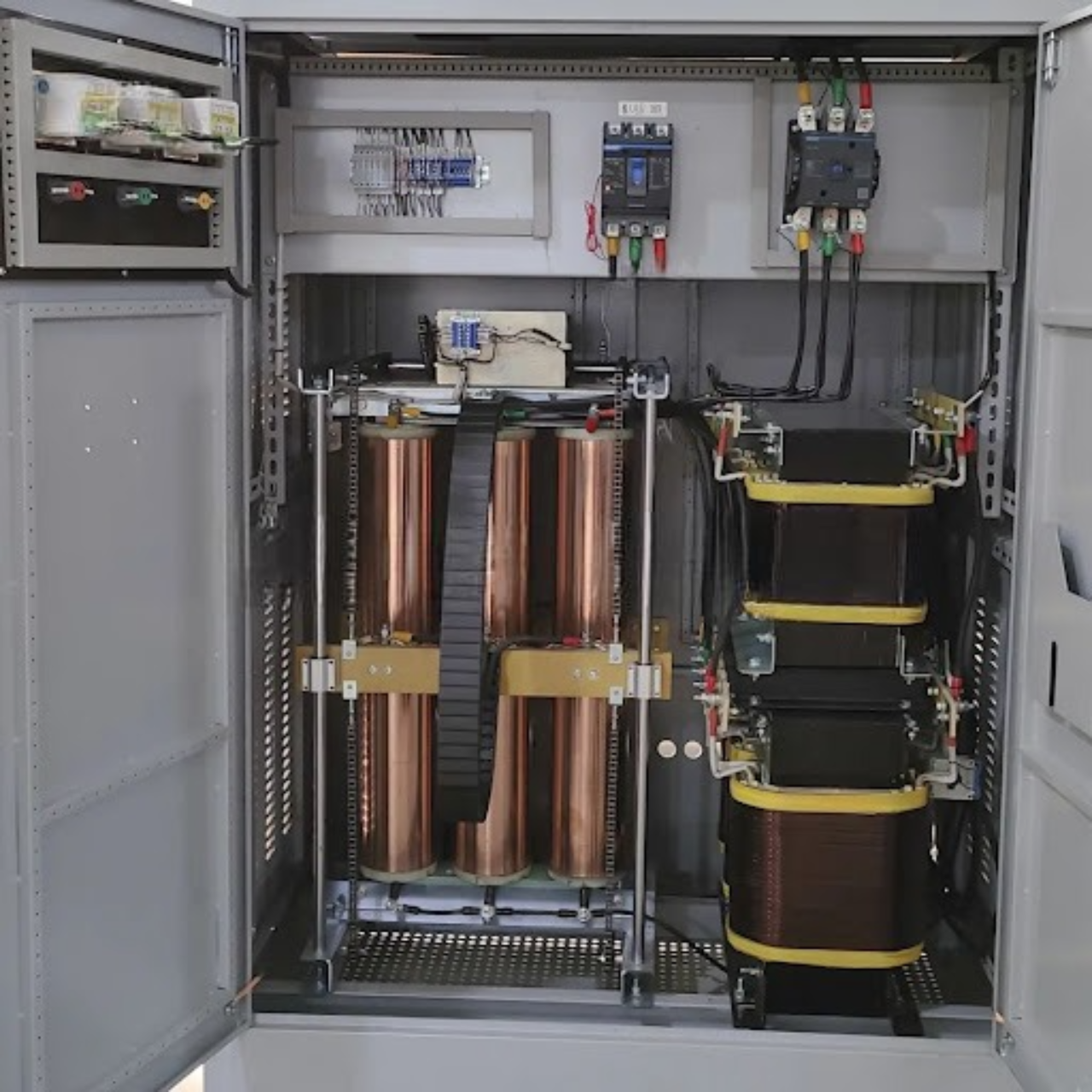
The Evolution of OLTC Technology
Recent developments in OLTC technology have focused on improving performance and reliability while addressing traditional limitations. Key innovations include:
- Hybrid designs combining mechanical and electronic elements
- Advanced control algorithms
- Integration with smart grid systems
- Enhanced monitoring capabilities
3. The Challenge of Reverse Action
One of the most significant challenges associated with OLTC operation is the phenomenon known as 'reverse action.' This occurs when the transformer's attempts to correct voltage levels actually lead to further voltage deterioration, potentially contributing to system collapse.
Mathematical Models
Mathematical models have been developed to understand and predict reverse action conditions. For example, the critical relationship between system parameters can be expressed as:
Zload < n²ZT.L.
Where:
Zload = Load impedance
n = Transformer turn ratio
ZT.L. = Transmission line impedance
Prevention Strategies
Tap Changer Blocking
- Implementation of blocking algorithms
- Careful timing of blocking actions
- Monitoring of system parameters
Advanced Control Strategies
- Adaptive control systems
- Fuzzy logic controllers
- Neural network-based solutions
4. Improving OLTC Performance
To enhance OLTC effectiveness in voltage stability maintenance, several key parameters can be optimized:
Key Parameters
- Step Voltage Value
- Larger steps for faster response
- Balanced against stability concerns
- Number of Steps
- More steps for finer control
- Limited by practical considerations
- Switching Time
- Minimized for faster response
- Balanced against mechanical stress
- Controller Delay Time
- Optimized for system characteristics
- Prevents unnecessary operations
Integration with Other Technologies
Modern power systems often employ multiple voltage stability solutions working in concert. OLTC operation can be coordinated with:
- FACTS devices
- Shunt capacitors
- Distributed generation
- Energy storage systems
5. Future Challenges and Opportunities
As power systems continue to evolve, several challenges and opportunities emerge for OLTC technology:
Key Areas of Development
- Integration with Renewable Energy
- Handling bi-directional power flow
- Adapting to variable generation patterns
- Smart Grid Applications
- Enhanced monitoring and control
- Predictive maintenance capabilities
- Advanced Materials and Components
- Improved reliability
- Reduced maintenance requirements
- Control System Development
- Advanced algorithms
- Real-time optimization
Conclusion:
The role of OLTC transformers in maintaining voltage stability remains crucial in modern power systems. While challenges such as reverse action must be carefully managed, ongoing technological developments continue to enhance OLTC capabilities and effectiveness. The integration of OLTC operations with other voltage control strategies, supported by advanced monitoring and control systems, offers promising solutions for future power system stability challenges.
Understanding and optimizing OLTC operation within the broader context of power system stability will remain an important area of research and development as power systems continue to evolve and face new challenges.
References:
Alkahdely, S. M., & Alsammak, A. N. B. (2023). A Review on Power System Voltage Stability with Limitation of an On Load Tap Changing Transformer. Al-Rafidain Engineering Journal (AREJ), 28(1), 181-192.
Liu, C. C., & Vu, K. T. (1989). Analysis of Tap-Changer Dynamics and Construction of Voltage Stability Regions. IEEE Transactions on Circuits and Systems, 36(4), 575-590.
Ohtsuki, H., Yokoyama, A., & Sekine, Y. (1991). Reverse Action of On-Load Tap Changer in Association with Voltage Collapse. IEEE Transactions on Power Systems, 6(1), 300-306.
Faiz, J., & Siahkolah, B. (2011). Electronic Tap-changer for Distribution Transformers. Power Systems, 2.
Mokkapaty, S., Weiss, J., Schalow, F., & Declercq, J. (2017). New generation voltage regulation distribution transformer with an on load tap changer for power quality improvement in the electrical distribution systems. CIRED - Open Access Proceedings Journal, 2017(1), 784-787.
Author:
Guangzhou Aputon Electrical Co.,Ltd.









CONTACT
Office-ADD: Second floor, Jiutan Village, Xiuquan Street, Huadu District, Guangzhou, Guangdong, China
Factory-ADD: Fenjiangbei Road No.91, Chancheng, Foshan, Guangdong, China
(formerly State-owned Foshan Transformer Factory)
Phone: +86-15876591363
00 1 (323) 841-2808
E-mail: Tony@aputon-transformer.com
Lily@aputon-transformer.com





 WhatsApp
 E-mail