 Tel: +86-15876591363
  Email: Tony@aputon-transformer.com

- English
- 简体中文
- عربي
- БеларускаяName
- Русский язык
- Français
- ខ្មែរKCharselect unicode block name
- ກະຣຸນາ
- Ruwanda
- Malay
- বাংলা
- ဗာရမ်
- Zulu, eNingizimu Afrika
- Português
- 日本語
- ภาษาไทย
- Español
- IndonesiaName
- Tiếng Việt
- 繁体中文
How Thermal Analysis is Revolutionizing the Design of Cast-Resin Transformers
2025-01-13 09:26:42
Click:
In an era where electrical infrastructure needs to be both safe and efficient, cast-resin dry-type transformers have emerged as the unsung heroes of power distribution. These transformers, particularly crucial in hospitals and residential areas, are gaining attention not just for their non-flammable nature, but for how thermal analysis is reshaping their design principles.
The Hidden Challenge in Modern Power Distribution
While most people rarely think about the transformers powering their buildings, engineers have been grappling with a significant challenge: heat management. Cast-resin transformers, despite their safety advantages, face unique thermal challenges that could affect their performance and longevity. The critical issue lies in the Epoxy Resin itself – while excellent for electrical insulation and fire prevention, it's not particularly good at heat dissipation.
'The thermal behavior of these transformers has been a persistent challenge in the industry,' notes Dr. Sarah Chen, a power systems engineer. 'Understanding heat distribution isn't just about preventing failures; it's about optimizing design for better performance and longer life.'
Breaking Down the Heat Problem
The research has revealed fascinating insights into how heat moves through these transformers. Using advanced computational fluid dynamics (CFD) and finite element method (FEM) analyses, researchers have mapped out temperature distributions with unprecedented detail.
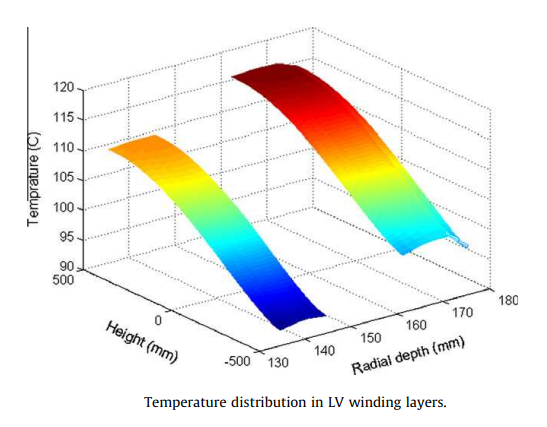
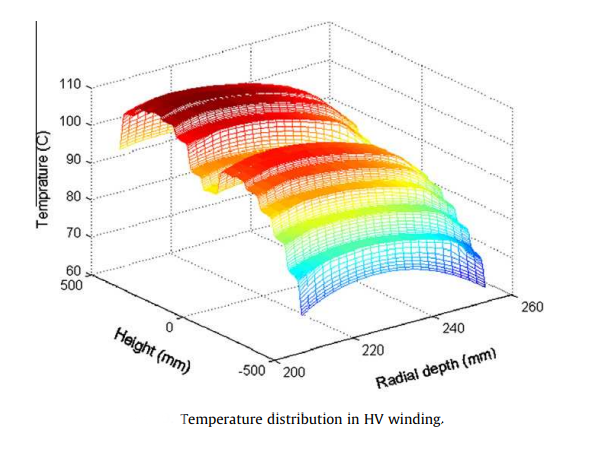
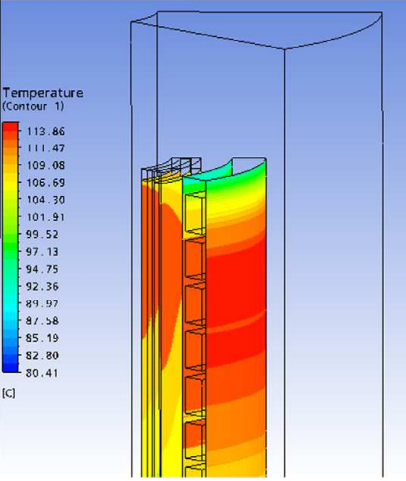
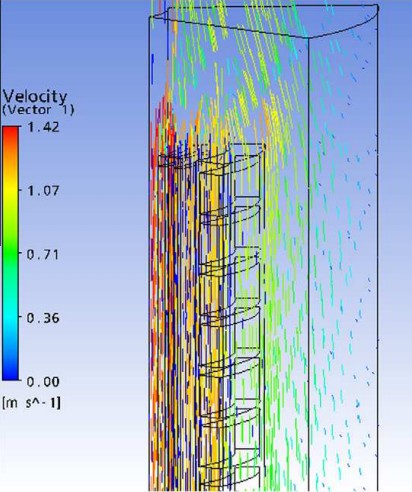
The temperature distribution on the surfaces of windings The velocity field in the air
The findings are reshaping how we think about transformer design.
One of the most interesting discoveries relates to air ducts – those seemingly simple channels that allow air to flow through the transformer. It turns out their width follows a 'Goldilocks principle': too narrow and they don't cool effectively, too wide and they actually cause more problems than they solve. This delicate balance comes from competing factors: while wider ducts can improve air circulation, they also force the high-voltage windings to be larger, increasing power losses.
The Technology Behind the Analysis
Modern thermal analysis of transformers relies on two primary approaches:
- Finite Element Method (FEM) Analysis
- Offers quick results suitable for rapid design iterations
- Uses experimental-analytical formulas for air cooling
- Provides good accuracy with computational efficiency
- Computational Fluid Dynamics (CFD)
- Delivers highly detailed 3D temperature mapping
- Models complex air flow patterns
- Requires more computational resources but offers superior accuracy
Design Innovations Emerging from Research
The latest thermal analysis has led to several key design improvements:
Smart Air Duct Design
Engineers have identified optimal air duct widths that balance cooling effectiveness with power efficiency. This has led to new design guidelines that specify different duct widths depending on transformer capacity and usage patterns.
Optimized Support Structures
The impact of support structures (known as 'dog bones' in industry parlance) has been quantified, leading to more efficient designs that maintain structural integrity while minimizing thermal impact.
Enhanced Resin Formulations
Understanding the crucial role of resin thermal conductivity has sparked innovation in resin formulations. New compounds are being developed that offer better heat dissipation while maintaining excellent electrical insulation properties.
Real-World Impact
These improvements aren't just theoretical. A recent case study of an 800 kVA transformer showed that optimized designs based on thermal analysis could reduce hot spot temperatures by up to 15°C while maintaining the same power output. This temperature reduction translates directly to longer transformer life and improved reliability.
The Future of Transformer Design
The industry is moving toward an integrated approach where thermal considerations are built into the initial design phase rather than being addressed as an afterthought. This shift is being enabled by advances in computational power and modeling accuracy.
'We're seeing a paradigm shift in how transformers are designed,' says Dr. Michael Roberts, lead engineer at Power Systems Innovation Lab. 'The ability to accurately model thermal behavior means we can push the boundaries of design while maintaining safety margins.'
Environmental and Economic Benefits
The improvements in transformer design aren't just technical victories – they have significant environmental and economic implications:
- Reduced material usage through optimized designs
- Lower energy losses leading to better efficiency
- Extended equipment lifetime reducing replacement frequency
- Improved reliability reducing maintenance costs
What's Next?
The future of cast-resin transformer design looks promising, with several developments on the horizon:
- AI-Driven Design Optimization
Machine learning algorithms are being developed to predict thermal behavior and optimize designs automatically. - Advanced Materials
Research into new resin compositions and conductor materials continues to push the boundaries of what's possible in transformer design. - Smart Monitoring Systems
Integration of thermal sensors and real-time monitoring systems is becoming more common, allowing for predictive maintenance and optimal operation.
The Bottom Line
The evolution of cast-resin transformer design through thermal analysis represents a perfect example of how advanced engineering tools can improve even well-established technologies. As our reliance on electrical infrastructure continues to grow, these improvements in transformer design will play a crucial role in building more reliable and efficient power distribution systems.
For those involved in building design or electrical infrastructure planning, these developments mean more reliable, efficient, and safer power distribution options. While the average person might never think about the transformer in their building's basement, the innovations in thermal design are quietly making their world a little bit better, one degree at a time.
The future of transformer design is looking cooler than ever – both literally and figuratively. We Aputon Electrical have been committed to innovation and production applications in the field of transformers. As we continue to push the boundaries of what's possible with thermal analysis and design optimization, we can expect to see even more innovations in this essential but often overlooked technology.
References
- Eslamian, M., Vahidi, B., & Eslamian, A. (2011). Thermal analysis of cast-resin dry-type transformers. Energy Conversion and Management, 52(7), 2479-2488.
- Halacsy, A.A., cited in Eslamian et al. (2011). Basic theory and design of magnetic circuits in dry-type transformers.
- Pierce, L.W., cited in Eslamian et al. (2011). Analysis of thermal performance in ventilated dry-type transformers.
- Stewart, J.R., & Whitman, A.M., cited in Eslamian et al. (2011). Thermal behavior studies on dry-type transformer coils.
- Whitman, A.M., cited in Eslamian et al. (2011). Temperature gradient analysis in ventilated dry-type transformers.
Author:
Guangzhou Aputon Electrical Co.,Ltd.









CONTACT
Office-ADD: Second floor, Jiutan Village, Xiuquan Street, Huadu District, Guangzhou, Guangdong, China
Factory-ADD: Fenjiangbei Road No.91, Chancheng, Foshan, Guangdong, China
(formerly State-owned Foshan Transformer Factory)
Phone: +86-15876591363
00 1 (323) 841-2808
E-mail: Tony@aputon-transformer.com
Lily@aputon-transformer.com





 WhatsApp
 E-mail