 Tel: +86-15876591363
  Email: Tony@aputon-transformer.com

- English
- 简体中文
- عربي
- БеларускаяName
- Русский язык
- Français
- ខ្មែរKCharselect unicode block name
- ກະຣຸນາ
- Ruwanda
- Malay
- বাংলা
- ဗာရမ်
- Zulu, eNingizimu Afrika
- Português
- 日本語
- ภาษาไทย
- Español
- IndonesiaName
- Tiếng Việt
- 繁体中文
What is a Transformer and Functions of Transformer?
2025-01-21 09:28:47
Click:
Electricity is the lifeblood of our modern world, much like the hyperactive electrons zipping around in your smartphone and the giant turbines at a power plant. Generated through various means—fossil fuels, nuclear reactions, and renewable sources like solar and wind—electricity travels through a vast network of power lines and substations, much like a highway system for electrons. But how does this electricity get transformed to meet our diverse needs? Enter the transformer, a device that’s both a magician and a workhorse in the world of electrical engineering.
Why and How to Transform Electricity
Efficiency, Safety, and Flexibility
Transforming electricity is like giving it a makeover to fit different needs. Power plants generate electricity at high voltages to minimize energy losses over long distances. However, just like you wouldn’t wear a tuxedo to the beach, you can’t use high-voltage electricity directly in your home. That’s where transformers come in!
Efficiency
High-voltage transmission reduces power loss due to resistance in the wires. Think of it as a superhighway for electrons, where they can travel long distances without losing too much energy.
Safety
Lower voltages are safer for residential and commercial use. A step-down transformer is your friendly neighborhood superhero, converting high-voltage electricity to a safer, usable form.
Flexibility
Different applications require different voltage levels. Whether it’s powering a small light bulb or a large industrial machine, transformers ensure that the right voltage is delivered every time.
How Transformers Work
Transformers operate on the principle of electromagnetic induction, a concept that might sound complex but is quite fascinating. Essentially, transformers are magical devices that can change the voltage of electricity without altering its frequency or power. They consist of two coils of wire (windings) wound around a common magnetic core.
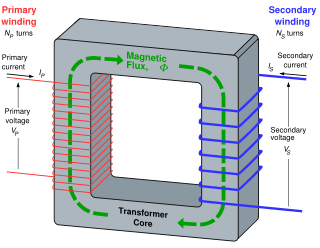
When an alternating current (AC) flows through the primary winding, it creates a varying magnetic field. This magnetic field then induces a current in the secondary winding, which can have a different number of turns, thus changing the voltage. The function of the transformer winding is crucial here, as it determines the voltage transformation.
The Principle of Operation of an Ideal Transformer
An ideal transformer operates under some fundamental principles, but let’s keep it simple and fun:
Faraday's Law of Electromagnetic Induction

The induced electromotive force (EMF) in a coil is directly proportional to the rate of change of the magnetic flux through the coil:
EMF = -N * dΦ/dt
Where ( N ) is the number of turns in the coil and ( Φ ) is the magnetic flux.
Transformer Ratio
The ratio of the number of turns in the primary and secondary windings determines the voltage transformation:
V1 / V2 = N1 / N2
Where ( V_1 ) and ( V_2 ) are the primary and secondary voltages, and ( N_1 ) and ( N_2 ) are the number of turns in the primary and secondary windings, respectively.
Power Conservation
In an ideal transformer, power is conserved:
P1 = P2 V1 * I1 = V2 * I2
Where ( I_1 ) and ( I_2 ) are the primary and secondary currents, respectively.
Real Transformers and Deviations from Ideal Transformers
While ideal transformers sound perfect, real transformers have a few quirks. Let’s dive into the details:

Core Losses
- Hysteresis Loss: Energy lost due to the magnetization and demagnetization of the core material. It’s like trying to turn a rusty door handle—it takes extra effort.
- Eddy Current Loss: Circulating currents induced in the core material, leading to heat generation. Think of it as a mini heat wave inside the transformer.
Copper Losses
- I^2R Loss: Energy lost due to the resistance of the windings. It’s like running through thick mud—the harder you try, the more energy you lose.
Leakage Flux
Some magnetic flux does not link both windings, reducing efficiency. It’s like a leaky bucket—some water always escapes.
Efficiency
The efficiency of a real transformer is given by:
η = (P_out / P_in) * 100%
Where ( P_out ) is the output power and ( P_in ) is the input power.
The Main Components of the Transformer and Functions of Transformer Components
A transformer is a bit like a well-organized kitchen, with each component playing a crucial role. Let’s take a tour:
Bushings
Bushings provide a path for current to flow into and out of the transformer while maintaining electrical insulation. They are typically made of porcelain or composite materials and are essential for high-voltage applications. Think of them as the insulated handles on a hot pot—crucial for safety.

Transformer Windings, Cores and Coils
- Windings: The conductive wire paths wrapped around the transformer core. They convert electrical energy to magnetic energy and back again. Primary windings receive input power, while secondary windings deliver output power. Think of them as the electromagnetic converters that make the transformer work.

- Cores: Made of laminated steel sheets to reduce eddy current losses. The core provides a low-reluctance path for the magnetic flux. It’s like a magnetic superhighway.
- Coils: Wound around the core, they consist of the primary and secondary windings. The number of turns in each winding determines the voltage transformation. They’re the heart and soul of the transformer.

Load Switch
A load switch is used to connect or disconnect the transformer from the load. It ensures safe operation and prevents damage during maintenance. It’s like a master switch for your entire electrical system—crucial for control.
Fuses
Fuses protect the transformer from overcurrent conditions by breaking the circuit when the current exceeds a safe limit. They’re the safety guards of the transformer, like the bouncers at a club—keeping everything in check.
Voltage Regulator
A voltage regulator maintains a constant output voltage despite variations in the input voltage. It’s crucial for stable operation in fluctuating electrical environments. Think of it as a thermostat for your house—keeping things comfortable no matter what.
Oil (Oil-Immersed Transformer)
Oil serves as both a coolant and an insulator in oil-immersed transformers. It helps dissipate heat and prevents arcing between components. It’s like a cooling bath for the transformer, keeping it cool and calm.
Gauge (Oil-Immersed Transformer)
Gauges monitor the oil level and temperature, ensuring optimal performance and safety. They’re the eyes and ears of the transformer, keeping a watchful eye on everything.
Classification of Transformers
Transformers come in many flavors, each designed for specific tasks. Let’s explore the main categories:
Categorized by Use
- Power Transformers: Used in power systems for transmission and distribution. They’re the heavy lifters of the transformer world.
- Distribution Transformers: Smaller units used to supply power to residential and commercial areas. They’re the friendly neighbors, always there when you need them.
- Instrument Transformers: Used for measurement and protection, such as current and potential transformers. They’re the precision tools, ensuring accuracy and safety.
Categorized by the Number of Phases
- Single-Phase Transformers: Suitable for single-phase circuits. They’re the solo artists, perfect for smaller jobs.
- Three-Phase Transformers: Commonly used in industrial and power systems for three-phase circuits. They’re the symphony orchestras, handling complex and powerful tasks.
Classified According to the Cooling Method
- Dry-Type Transformers: Do not use oil; cooled by air or fans. They’re the eco-friendly options, perfect for indoor use.

- Oil-Immersed Transformers: Use oil for cooling and insulation. They’re the traditionalists, reliable and robust.

Classified According to the Way of Regulating Pressure
- No-Load Tap Changer (NLTC): Adjusts the voltage when the transformer is not under load. They’re the planners, setting things up before the action starts.
- On-Load Tap Changer (OLTC): Adjusts the voltage while the transformer is under load. They’re the problem solvers, making adjustments on the fly.

Classified by the Number of Windings
- Two-Winding Transformers: Have one primary and one secondary winding. They’re the basic models, getting the job done efficiently.
- Multi-Winding Transformers: Have more than two windings for multiple voltage outputs. They’re the multitaskers, handling multiple jobs simultaneously.
Classified According to the Structure of the Iron Core
- Core-Type Transformers: The core surrounds the windings. They’re the protective types, keeping everything safe and secure.
- Shell-Type Transformers: The windings surround the core. They’re the flexible types, adaptable to various needs.
Classification by Voltage Level
- High-Voltage Transformers: Used in high-voltage power systems. They’re the giants, handling massive loads.
- Medium-Voltage Transformers: Used in medium-voltage power systems. They’re the middle managers, balancing efficiency and reliability.
- Low-Voltage Transformers: Used in low-voltage power systems. They’re the everyday heroes, making sure everything runs smoothly.
By understanding the principles, components, and classifications of transformers, we can better appreciate their critical role in modern electrical systems. So, the next time you flip a switch, remember the humble transformer working hard behind the scenes to keep the lights on!
Author:
Guangzhou Aputon Electrical Co.,Ltd.









CONTACT
Office-ADD: Second floor, Jiutan Village, Xiuquan Street, Huadu District, Guangzhou, Guangdong, China
Factory-ADD: Fenjiangbei Road No.91, Chancheng, Foshan, Guangdong, China
(formerly State-owned Foshan Transformer Factory)
Phone: +86-15876591363
00 1 (323) 841-2808
E-mail: Tony@aputon-transformer.com
Lily@aputon-transformer.com





 WhatsApp
 E-mail