 Tel: +86-15876591363
  Email: Tony@aputon-transformer.com

- English
- 简体中文
- عربي
- БеларускаяName
- Русский язык
- Français
- ខ្មែរKCharselect unicode block name
- ກະຣຸນາ
- Ruwanda
- Malay
- বাংলা
- ဗာရမ်
- Zulu, eNingizimu Afrika
- Português
- 日本語
- ภาษาไทย
- Español
- IndonesiaName
- Tiếng Việt
- 繁体中文
Explain clearly the "generation, transmission, transformation, distribution and use" of electricity
2025-09-27 00:00:00
Click:
In our daily life, the use of electricity is very normal. It is not until there is a sudden power outage one day that we realize the importance of electricity and start to care about us, the power workers. Many people only know about the use of electricity, but don't know how electricity is transmitted and distributed to thousands of households. Today, the editor will take you to learn about the five major links of electricity!
Power generation
The initial stage of generating electrical energy
Transmission
The process of transmitting electrical energy to distant locations
Substation
The process of increasing or decreasing the voltage level of electric energy

Distribution
The process of distributing electrical energy to users

Electricity
Consumption

Power Generation Overview
Power generation refers to the process of converting hydropower, thermal energy from fossil fuels (coal, oil, natural gas), nuclear energy, solar energy, wind energy, geothermal energy, ocean energy, etc., into electrical energy using power generation equipment. This energy is used to supply the needs of various sectors of the national economy and the people's daily lives.
Power generation type
Power generation units are divided into thermal power units, hydropower units, nuclear power units and other energy power generation units according to the type of energy.
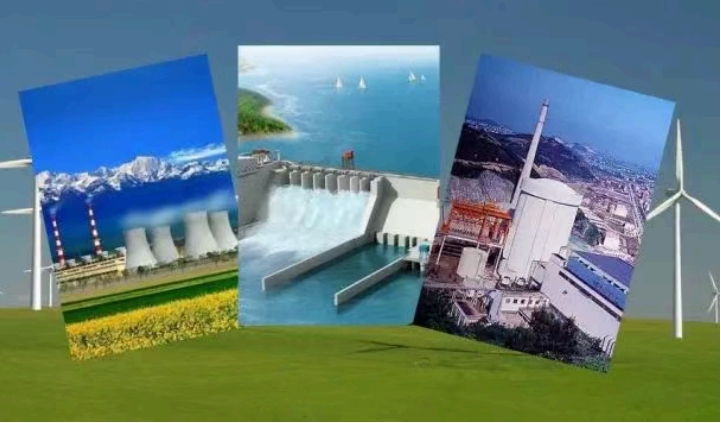
Power generation type
1.Thermal Power
Thermal power generation refers to the use of energy from fossil fuels such as coal, oil, and natural gas to generate electricity. Based on the generation method, thermal power generation is categorized as coal-fired steam turbine generation, oil-fired steam turbine generation, gas-steam combined cycle generation, and internal combustion engine generation. Thermal power generation is currently the mainstay of power generation. In the current climate of promoting a harmonious society and a circular economy, we must prioritize the impact of electricity on the environment and non-renewable energy sources when improving thermal power technology. Although China now has some nuclear power units, thermal power still accounts for the majority of the electricity market.
2.Hydropower
Hydropower is a comprehensive engineering facility that converts water energy into electrical energy. It generally includes a reservoir formed by water retaining and discharge structures, a water diversion system for a hydropower station, a power plant, and electromechanical equipment. High water levels in the reservoir flow through the diversion system into the plant, driving the turbine generator sets to generate electricity, which is then fed into the power grid via step-up transformers, switch stations, and transmission lines.
3.Wind Power
Wind power utilizes wind power to rotate windmill blades, which are then accelerated by a speed increaser to generate electricity. Current windmill technology requires only a gentle breeze of approximately three meters per second to generate electricity.
Wind power is one of the most technologically mature, scalable, and commercially viable power generation methods in the renewable energy sector. The development of wind power is crucial for ensuring energy security, adjusting the energy mix, reducing environmental pollution, and achieving sustainable development.
4.Other energy generation
In addition to the aforementioned types of power generation, there are other energy sources:
Biomass power generation: This involves harnessing the power of organisms that generate strong biomass electricity, collecting and converting it for use.
Tidal power generation: This utilizes the potential energy of the rising and falling tides to generate electricity.
Solar thermal power generation: This utilizes sunlight or heat to generate electricity.
Transmission Overview
Power transmission is the transfer of electrical energy. Together with transformation, distribution, and consumption, it constitutes the overall function of the power system. Power transmission connects power plants and load centers over vast distances (up to thousands of kilometers), enabling the development and utilization of electrical energy beyond geographical constraints. Compared with other energy transmission methods (such as coal and oil), power transmission offers low losses, high efficiency, flexibility, ease of regulation, and minimal environmental pollution. It can also connect power plants in different locations, enabling peak-valley regulation. Power transmission is a key manifestation of the superiority of electric energy utilization and serves as a vital energy artery in modern society.
Transmission line composition
Compared with substation equipment, transmission lines are relatively simple and have a relatively simple structure. According to the equipment status inspection and maintenance, transmission lines are mainly divided into 7 units and 1 environment. The 7 units are poles, ground wires, insulators, hardware, pole foundations, grounding devices, and ancillary facilities. One environment refers to the channel environment.
Transmission type
Power transmission is categorized into AC and DC based on the nature of the current being transmitted. DC transmission was first successfully implemented in the 1880s. However, due to the technical limitations of the time, DC voltage was difficult to increase further, limiting its transmission capacity and efficiency. By the end of the 19th century, DC was gradually replaced by AC. The success of AC ushered in a new era of electrification in the 20th century. Currently, three-phase AC transmission at a frequency of 50 Hz (or 60 Hz) is widely used. Since the 1960s, DC transmission has seen further developments, combining with AC to form a hybrid AC/DC power system.
Transmission voltage level
The level of transmission voltage is a primary indicator of the development of power transmission technology. The main voltage levels for my country's transmission lines are: Generally speaking, the greater the power transmission capacity, the higher the voltage level used. Ultra-high voltage transmission effectively reduces line losses, lowers unit line construction costs, reduces arable land occupation, maximizes line corridor utilization, and minimizes power loss and line impedance voltage drop. The reason is: P = U * I.
According to the above formula, while maintaining constant power, increasing voltage reduces current, thereby reducing heat loss in the transmission line.
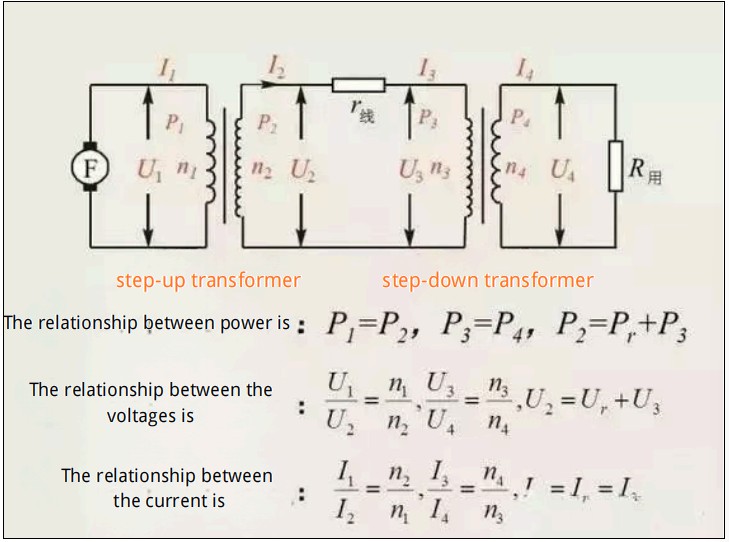
step-up transformer step-down transformer
The relationship between power is
The relationship between the voltages is
The relationship between the current is
Substation Overview
Substation is the process of converting voltage from a low level to a high level (step-up) or from a high level to a low level (step-down) in a power system through certain equipment. The rated voltage of generators in power systems is generally below 15-20 kV. Common transmission voltage levels include 765 kV, 500 kV, 220-110 kV, and 35-60 kV; distribution voltage levels include 35-60 kV and 3-10 kV. Electricity users use a variety of high-voltage equipment rated at 3-15 kV, as well as low-voltage equipment rated at 110 V, 220 V, and 380 V. Substations are required to connect these different voltage levels to form a single system.
Substation Classification
Voltage transformation is divided into two types: step-up and step-down.
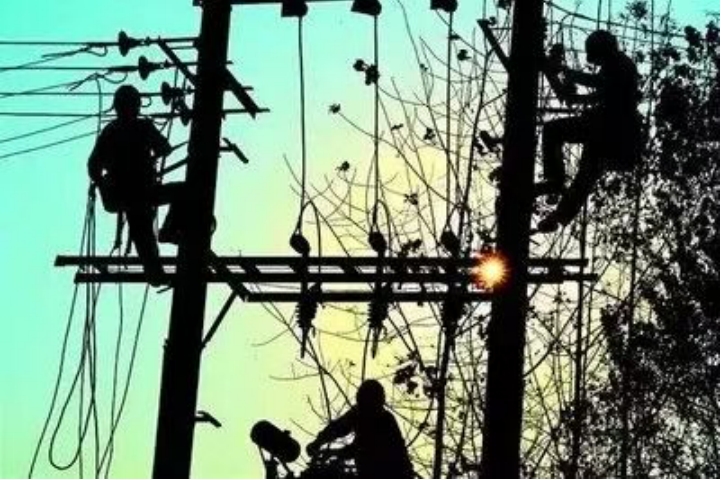
1. Step-up
In the power system, power plants convert natural primary energy into electrical energy and transmit it to remote users. To minimize power losses and line impedance voltage drops on transmission lines, the voltage must be increased.
2. Step-down
To ensure user safety, the voltage must be reduced and distributed to individual users.
Transformer Principle
The main component for achieving power transformation is the transformer, and its main principle is the principle of electromagnetic induction. When an AC voltage UI is applied to the transformer and the current flowing through the primary winding is I1, the current will generate an alternating magnetic flux in the iron core, causing the primary winding and the secondary winding to have an electromagnetic connection. According to the principle of electromagnetic induction, the alternating magnetic field will induce an electromotive force when passing through the two windings. The magnitude of the electromotive force is proportional to the number of winding turns and the maximum value of the main flux. The voltage on the side with more winding turns is high, and the voltage on the side with fewer winding turns is low. When the secondary side of the transformer is open, that is, the transformer is unloaded, the secondary terminal voltage is proportional to the number of turns of the primary and secondary windings, and the transformer serves the purpose of converting voltage.
substation
A substation is a place in the power system where the voltage and current of electric energy are transformed, concentrated and distributed. It is the intermediate link between power plants and power users, and at the same time connects power grids of various voltage levels through substations. To ensure the quality of electric energy and the safety of equipment, voltage adjustment, flow control (the flow and distribution of voltage, current and power in each node and branch of the power system) and protection of transmission and distribution lines and major electrical equipment are also required in the substation.
Power Distribution Overview
Power distribution refers to the network that distributes electrical energy within the power grid. It typically refers to the network that supplies power directly to users on the low-voltage side of a secondary step-down transformer, or after voltage reduction. It is the link in the power system that directly connects to and distributes electrical energy to users.
Distribution network composition
The distribution system consists of a distribution substation (usually reducing the transmission voltage of the power grid to a distribution voltage), high-voltage distribution lines (i.e., voltages above 1 kilovolt), distribution transformers, low-voltage distribution lines (voltages below 1 kilovolt), and corresponding control and protection equipment.
Distribution network classification
Power distribution is generally divided into high voltage distribution, medium voltage distribution and low voltage distribution according to voltage:
high voltage distribution voltage: 35kV, 63kV, also known as local power grid;
medium voltage distribution voltage: 10kv;
low voltage distribution voltage: 380/220v.
Power distribution is categorized by power supply area into urban, rural, and factory distribution networks:
Urban distribution networks: Serving urban residents for work and daily life, with a relatively concentrated load.
Rural distribution networks: Serving agricultural production and rural life, with a large power supply radius.
Factory distribution networks: Serving industrial bases for production, with a relatively large load.
Power distribution is categorized by power supply method into AC and DC:
AC Power Supply:
Three-phase, three-wire system: divided into delta connection (used for high-voltage power distribution, three-phase 220V motors, and lighting) and star connection (used for high-voltage power distribution, three-phase 380V motors).
Three-phase, four-wire system: used for mixed 380/220V low-voltage power and lighting distribution.
Three-phase, two-wire, one-ground system: mostly used for rural power distribution.
Three-phase, single-wire system: commonly used for electric railway traction power supply.
Single-phase, two-wire system: mainly used for residential power supply.
DC Power Supply:
Two-wire system: used for urban trolleybuses, subway locomotives, mining traction locomotives, etc.
Three-wire system: supplies power for power plants, substations, distribution stations, secondary equipment, and electrolysis and electroplating.
Main indicators of distribution network
The following four main indicators are considered for distribution networks:
Power supply reliability: Power supply reliability refers to the degree of reliability of continuous power supply to users.
Grid loss rate: The grid loss rate can be defined as the ratio of power grid energy loss to total power supply, usually expressed as a percentage.
Voltage fluctuation and voltage flicker: Voltage fluctuation refers to rapid changes in grid voltage or periodic changes in the voltage envelope. Voltage
Author:
Guangzhou Aputon Electrical Co.,Ltd.









CONTACT
Office-ADD: Second floor, Jiutan Village, Xiuquan Street, Huadu District, Guangzhou, Guangdong, China
Factory-ADD: Fenjiangbei Road No.91, Chancheng, Foshan, Guangdong, China
(formerly State-owned Foshan Transformer Factory)
Phone: +86-15876591363
00 1 (323) 841-2808
E-mail: Tony@aputon-transformer.com
Lily@aputon-transformer.com





 WhatsApp
 E-mail